The Shock of Ancient Athletic Culture
Imagine tuning into the Olympics today and discovering that every athlete competed completely nude. The reaction would be swift, universal, and probably involve a lot of angry letters to television networks.
Yet for nearly 1,200 years, this was exactly how the most prestigious athletic competition in the ancient world operated. At the Olympic Games in Olympia, Greece, athletes didn't just tolerate nudity—they embraced it as a fundamental part of what made their competitions sacred, civilized, and distinctly Greek.
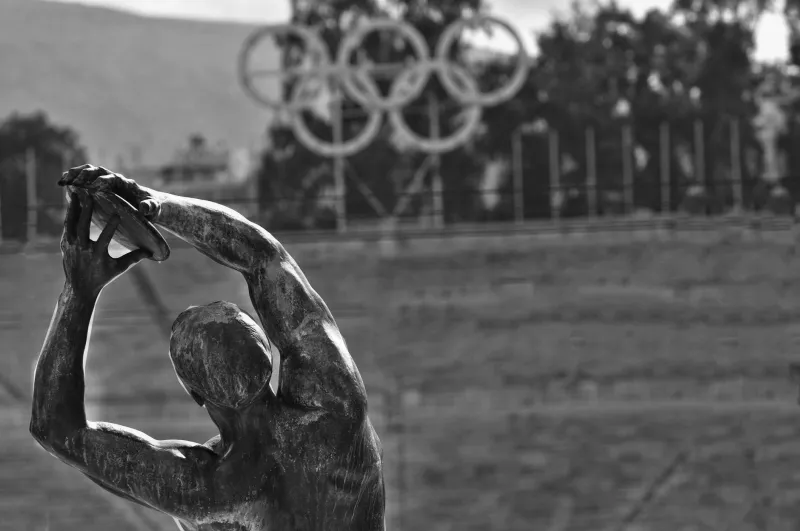
 Photo: Olympic Games, via static.vecteezy.com
This wasn't some quirky ancient custom that we can dismiss as primitive. Athletic nudity in ancient Greece was a deliberate, sophisticated cultural statement that reveals something profound about how sport has always been about much more than winning and losing.
When Clothes Became the Enemy of Excellence
The tradition of athletic nudity supposedly began around 720 BC, though like many ancient origin stories, the details are murky. According to Greek historians, a runner named Orsippos of Megara was competing in the stadion race when his loincloth fell off mid-race. Rather than stopping to adjust his clothing, he continued running nude—and won.
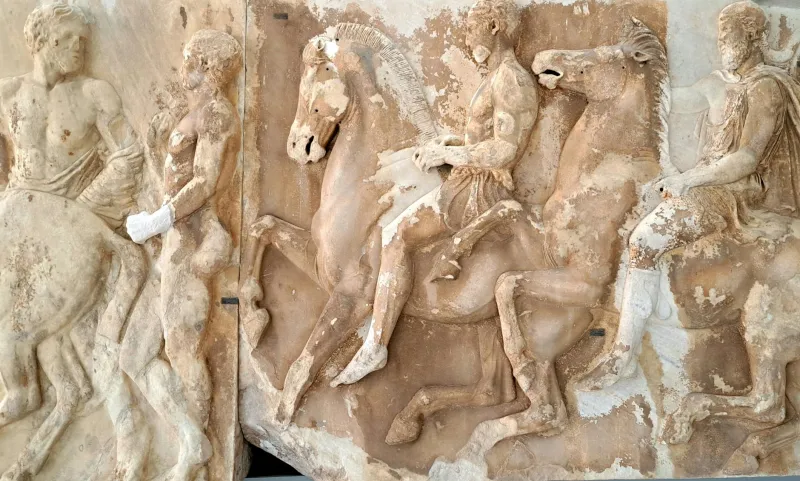
 Photo: Orsippos of Megara, via www.livius.org
Whether this story is true or legendary doesn't matter. What matters is that the Greeks chose to remember it this way, suggesting that they saw the abandonment of clothing as a moment of athletic liberation.
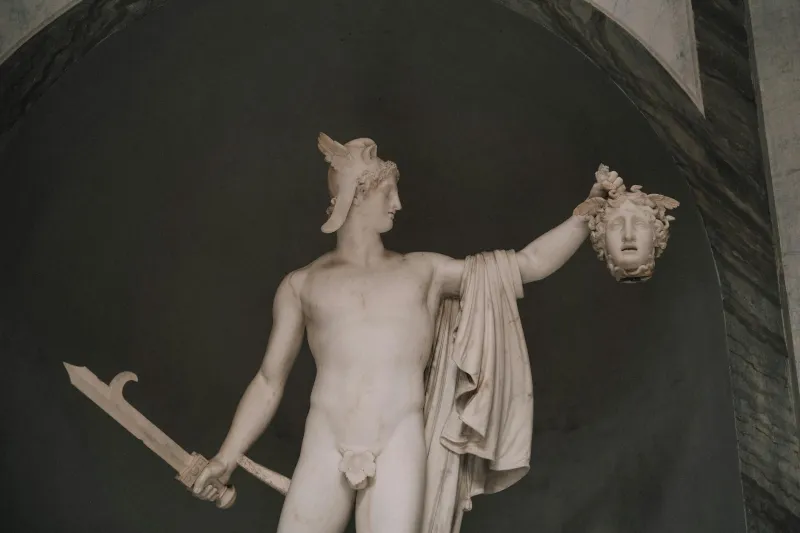
Soon, competing nude became not just acceptable but required. The Greeks had a word for it: gymnos, meaning naked, which gave us our modern word "gymnasium." To the ancient Greeks, a gymnasium wasn't just a place to exercise—it was a place to celebrate the unadorned human form in all its athletic glory.
Naked as a Political Statement
For ancient Greeks, athletic nudity wasn't about exhibitionism or shock value. It was about identity, civilization, and cultural superiority.
The Greeks believed that only truly civilized people could appreciate the beauty of the human body in motion. "Barbarians"—their term for anyone who wasn't Greek—were too primitive, too shame-bound, too culturally inferior to understand the aesthetic and spiritual value of athletic nudity.
This wasn't just athletic policy; it was foreign policy. When Greek athletes competed nude, they were essentially saying: "We are so confident in our civilization, so comfortable with human excellence, so advanced in our thinking, that we can celebrate the body without shame or embarrassment."
It was the ultimate power move, performed on the most public stage imaginable.
The Religious Dimension of Athletic Bodies
The ancient Olympics weren't just athletic competitions—they were religious festivals honoring Zeus, king of the gods. In this context, athletic nudity took on spiritual significance.
Greek athletes believed they were offering their physical excellence as a form of worship. The human body, trained to peak condition and displayed without concealment, became a kind of living sacrifice to the gods. Athletes weren't just competing for personal glory; they were demonstrating the divine potential of human physical achievement.
This religious dimension helps explain why athletic nudity was so strictly enforced. Women were banned from even watching the Olympic Games, partly because the combination of religious ritual and male nudity was considered too sacred and powerful for female eyes. (The penalty for a woman caught attending was death, though this was apparently never actually enforced.)
The Aesthetic of Human Perfection
Ancient Greeks were obsessed with physical beauty in a way that makes modern fitness culture look casual. They believed that a perfectly developed body reflected a perfectly developed character—a concept they called kalokagathia, meaning "beautiful and good."
Athletic nudity allowed judges, spectators, and fellow competitors to evaluate not just athletic performance but physical perfection. The Greeks studied athletic bodies the way art critics study sculptures, looking for ideal proportions, muscular development, and aesthetic harmony.
This wasn't shallow vanity. To the Greeks, physical beauty was a moral category. They believed that training your body to perfection was a form of ethical development, and that athletic excellence could make you a better person.
How Modern Sports Inherited Ancient Obsessions
While modern athletes compete fully clothed, we've inherited more from ancient Greek athletic nudity than we might realize.
Consider how much of contemporary sports culture revolves around the display and celebration of athletic bodies. Professional athletes are constantly photographed, measured, and analyzed not just for their performance but for their physical appearance. We obsess over muscle definition, body fat percentages, and aesthetic perfection in ways that would make ancient Greeks proud.
The modern fitness industry, worth hundreds of billions of dollars globally, is essentially built on the Greek idea that physical excellence is a form of moral and aesthetic achievement. When people post workout photos on social media or compete in bodybuilding competitions, they're participating in a tradition that stretches back to ancient Olympia.
The Uniform as Cultural Evolution
The shift from nudity to uniforms in athletic competition represents more than just changing fashion—it reflects fundamental changes in how we think about bodies, competition, and cultural values.
Modern athletic uniforms serve multiple purposes that would have baffled ancient Greeks. They provide team identity, corporate sponsorship opportunities, technological performance advantages, and cultural modesty. But they also conceal the very thing that ancient Greeks most wanted to celebrate: the unadorned human form in peak condition.
In some ways, modern athletic clothing has become a barrier between athletes and the kind of pure physical celebration that the Greeks valued. We've gained technological advantages and cultural comfort, but we've lost something too—that direct, unmediated appreciation of human physical achievement.
The Paradox of Athletic Spectacle
Ancient Greek athletic nudity reveals a paradox that still defines modern sports: we watch athletics partly to see human bodies perform at their absolute limits, but we're often uncomfortable acknowledging the physical, aesthetic dimension of that attraction.
The Greeks had no such discomfort. They celebrated athletic bodies as openly as they celebrated athletic achievements, seeing both as expressions of human excellence worth worshiping.
Modern sports culture is full of contradictions that the Greeks would have found puzzling. We celebrate athletic bodies while covering them up. We admire physical perfection while pretending we're only interested in performance. We create elaborate spectacles around athletic competition while maintaining that the spectacle itself isn't the point.
What Ancient Nudity Teaches Modern Sports
The ancient Greek tradition of athletic nudity reminds us that sport has always been about more than winning and losing. It's about cultural identity, aesthetic values, religious expression, and the celebration of human potential.
When we watch modern athletics—whether it's the Olympics, professional sports, or fitness competitions—we're participating in traditions that stretch back thousands of years. We're still asking the same fundamental questions the Greeks asked: What does it mean to push the human body to its limits? How should we celebrate physical excellence? What can athletic achievement teach us about human potential?
The Greeks answered these questions by stripping away everything that might distract from pure physical achievement. Modern sports have chosen a different path, but the underlying impulse remains the same: the desire to witness and celebrate the extraordinary things human bodies can do.
Whether clothed or naked, that impulse connects every modern athlete to those ancient Greek competitors who first understood that athletic excellence is always about more than just crossing the finish line first.