Ancient to Modern Where the History of Sport Comes Alive

Ancient to Modern

Where the History of Sport Comes Alive

Latest Articles

The Wall That Wasn't There: How Belief Nearly Stopped the Four-Minute Mile Forever
Records Then vs Now

The Wall That Wasn't There: How Belief Nearly Stopped the Four-Minute Mile Forever

For decades, runners and doctors alike believed the human body simply could not run a mile in under four minutes. Then one man ignored that idea entirely — and suddenly everyone could do it. The story of the four-minute mile is less about lungs and legs than it is about what happens inside an athlete's head.


The Games That Almost Ended the Games: Paris 1900 and the Near-Death of the Olympics
Legendary Athletes and Moments

The Games That Almost Ended the Games: Paris 1900 and the Near-Death of the Olympics

The 1900 Paris Olympics were so disorganized that some athletes didn't know they'd competed in the Olympics until years later. Spread across five chaotic months, buried inside a World's Fair, and largely ignored by the public, the second modern Games nearly strangled the Olympic movement in its cradle. The story of what went wrong — and what it accidentally taught the world — is one of sport history's most important forgotten chapters.

Naked to Nanotechnology: The Wild 2,800-Year Wardrobe of the Olympic Athlete
Evolution of the Olympics

Naked to Nanotechnology: The Wild 2,800-Year Wardrobe of the Olympic Athlete

Ancient Greek Olympians didn't just compete without fancy gear — they competed without any gear at all. The journey from nude wrestling pits in Olympia to today's aerodynamic bodysuits and carbon-plated supershoes is one of sport's most fascinating and underappreciated stories. What athletes wear has quietly become as important as how they train.

Sand, Sweat, and Algorithms: What Ancient Greek Training Grounds Can Still Teach Our High-Tech Athletic Factories
Evolution of the Olympics

Sand, Sweat, and Algorithms: What Ancient Greek Training Grounds Can Still Teach Our High-Tech Athletic Factories

The ancient Greek gymnasium was an open-air complex of sand pits, running tracks, and cold-water baths—no screens, no sensors, no sports scientists with clipboards. Today's elite training centers look more like aerospace labs than playgrounds. But as the technology stacks higher and higher, a nagging question remains: are we building better athletes, or just more dependent ones?

Built Different: How the World's Genetic Variety Quietly Became the Greatest Force in Athletic History
Legendary Athletes and Moments

Built Different: How the World's Genetic Variety Quietly Became the Greatest Force in Athletic History

For most of the modern Olympics' history, the record books were written by a narrow slice of humanity—mostly European and North American men with access to resources, coaching, and competition. Then the world showed up. What happened next wasn't just a political story about inclusion. It was a biological revelation about what the human body can actually do.

One Hundredth of a Second: The Long, Strange Journey From a Judge's Eye to the Atomic Clock
Records Then vs Now

One Hundredth of a Second: The Long, Strange Journey From a Judge's Eye to the Atomic Clock

For most of human history, the fastest person in the room was simply whoever crossed the line first—no numbers, no fractions, no argument. Then came the stopwatch, the photo finish, and eventually a digital precision so fine it split the sporting world into winners and nearly-winners separated by margins the human eye will never see.

Faster, Higher, Longer: Why Women's Athletic Records Are Falling Off a Cliff — and What That Really Means
Records Then vs Now

Faster, Higher, Longer: Why Women's Athletic Records Are Falling Off a Cliff — and What That Really Means

Pull up the data on women's Olympic records over the past half-century and a pattern emerges that stops you cold. Women's times and distances have been improving at a rate that dwarfs men's — not because female athletes are somehow more talented, but because they started from a position of enforced disadvantage. The real question isn't how far women have come. It's how far they still have to go.

The Thin Air Secret: How Where You Train Has Quietly Become as Important as How You Train
Evolution of the Olympics

The Thin Air Secret: How Where You Train Has Quietly Become as Important as How You Train

Kenya and Ethiopia have produced a staggering share of the world's best distance runners for decades, and for a long time the explanation felt almost mystical. Then sports science caught up and found something far more concrete — geography. The elevation advantage that East African runners grew up with has since become something wealthier nations try to buy, sparking a quiet revolution in how Olympic athletes prepare and who gets to compete at the top.

Three Minutes and Change: The Night Roger Bannister Broke the Clock — and Every Runner After Him
Legendary Athletes and Moments

Three Minutes and Change: The Night Roger Bannister Broke the Clock — and Every Runner After Him

For decades, sports medicine experts and coaches genuinely believed the human body would give out before a runner could cover a mile in under four minutes. Then Roger Bannister laced up his shoes on a blustery May evening in Oxford and made the impossible look routine. What happened next tells us more about the human mind than it does about the human body.

The Iron Ball That Time Forgot: Why the Shot Put Refuses to Evolve
Origins of Sport

The Iron Ball That Time Forgot: Why the Shot Put Refuses to Evolve

Every other track and field event has been transformed by carbon fiber, synthetic surfaces, and biomechanical research. The shot put is still a heavy metal ball and a small circle. This is the story of why that's never going to change — and why it doesn't need to.

Leaning Into the Bend: The Long Quest to Unlock the 200-Meter Curve
Legendary Athletes and Moments

Leaning Into the Bend: The Long Quest to Unlock the 200-Meter Curve

American sprinters spent decades dominating the straight but struggling with the curve. The 200 meters demanded something different — a mastery of physics, geometry, and timing that took generations to fully understand. Here's how they finally cracked it.

Gut Feeling and Glory: How America's First Track Coaches Accidentally Invented Modern Sports Science
Records Then vs Now

Gut Feeling and Glory: How America's First Track Coaches Accidentally Invented Modern Sports Science

Before heart rate monitors, lactate thresholds, and GPS tracking, America's earliest track coaches were building champions on nothing but instinct and observation. Somehow, a lot of what they guessed turned out to be exactly right — and sports scientists are still trying to figure out how.

The Oldest Sport on Earth Almost Got Cut From the Olympics. Here's What That Says About Us.
Legendary Athletes and Moments

The Oldest Sport on Earth Almost Got Cut From the Olympics. Here's What That Says About Us.

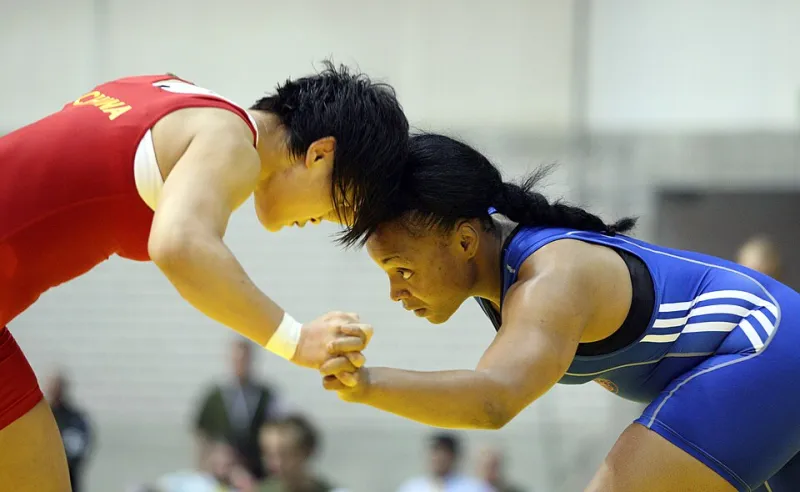
Wrestling was depicted in ancient Greek art, celebrated at the original Olympic Games, and practiced by warriors across the ancient world. So how did one of humanity's oldest athletic traditions end up fighting for its survival in 2013? The answer reveals something uncomfortable about what we've decided sport is actually for.

Racing Against a Number: How the Stopwatch Gave Athletes an Opponent They Could Never Beat
Evolution of the Olympics

Racing Against a Number: How the Stopwatch Gave Athletes an Opponent They Could Never Beat

Before the stopwatch, a race had a winner. After it, a race had a time — and that changed everything about how Americans understood athletic achievement. The evolution from mechanical clicks to laser precision didn't just improve measurement. It invented an entirely new kind of competition, one where the opponent is invisible, immortal, and never gets tired.

The Backward Revolution: How One Athlete's Wild Leap Rewrote the Science of the High Jump
Records Then vs Now

The Backward Revolution: How One Athlete's Wild Leap Rewrote the Science of the High Jump

The high jump began as a gentlemanly curiosity in rural Scotland and ended up as one of the most scientifically scrutinized events in all of track and field. Somewhere in between, a college kid from Oregon turned his back on a century of tradition — literally — and changed everything. Here's how a sport built on instinct became a physics classroom.

The Journey Was the First Competition: How Getting to the Games Shaped Who Got to Play
Records Then vs Now

The Journey Was the First Competition: How Getting to the Games Shaped Who Got to Play

Before ancient Greek athletes ever competed at Olympia, they had already survived weeks of brutal travel that eliminated most who tried. The story of how transportation shaped athletic opportunity is one of sport's most underappreciated revolutions.

Sitting Out Was Shameful: The Long, Strange Road From No Substitutes to the Modern Bench
Evolution of the Olympics

Sitting Out Was Shameful: The Long, Strange Road From No Substitutes to the Modern Bench

In ancient Greece, leaving a competition due to injury wasn't strategy — it was disgrace. The story of how the substitute player went from cultural taboo to tactical masterstroke is one of sport's most overlooked transformations.

Before Ali Opened His Mouth, the Greeks Were Already Doing This
Legendary Athletes and Moments

Before Ali Opened His Mouth, the Greeks Were Already Doing This

Muhammad Ali didn't invent trash talk — he just made it famous. Ancient Greek athletes were running psychological warfare on their rivals long before the first punch was thrown, and modern sports science is finally proving they were onto something real.

How the World Showed Up and Took the Track: The Slow Collapse of America's Olympic Iron Grip
Evolution of the Olympics

How the World Showed Up and Took the Track: The Slow Collapse of America's Olympic Iron Grip

For decades, American athletes treated Olympic track and field like a personal trophy case. Then, nation by nation, the world figured out the formula — and nothing in international athletics was ever the same. This is the story of how global ambition, smart coaching, and cultural pride dismantled a dominance that once seemed permanent.

Counting Everything: The Long, Strange Trip From Box Scores to Biometric Data
Records Then vs Now

Counting Everything: The Long, Strange Trip From Box Scores to Biometric Data

Humans have been measuring athletic greatness since the ancient Greeks carved victors' names into stone. Today, a single NFL player generates more data in one game than a 19th-century newspaper could have printed in a month. The obsession never changed — only the tools did.