Before the Machine: When America's Olympic Heroes Were Just Regular Guys With Day Jobs
The Mailman Who Outran the World
Arthur Blake had to take vacation days from his job delivering mail in Boston to compete in the 1500 meters at the 1896 Olympics in Athens. He'd never been outside Massachusetts, spoke no Greek, and had exactly zero international racing experience. His training consisted of running his postal route a little faster than usual and jogging around a local track after work.
 Photo: Arthur Blake, via wiki.scotlandonair.com
He won the bronze medal, beating seasoned European athletes who'd been training for years with professional coaches.
Blake's story isn't unique — it's the blueprint for how America accidentally built an Olympic empire in the early 1900s, back when being an elite athlete meant you were really good at your hobby, not that athletics was your profession.
The Accidental Dynasty
Between 1896 and 1924, American athletes dominated the Olympics in a way that seems impossible today. At the 1904 Olympics in St. Louis, Americans won 78 of the 91 gold medals available. Even accounting for the fact that the games were held on American soil and many foreign athletes couldn't afford to attend, the dominance was staggering.
But here's the thing that makes this achievement even more remarkable: America had no national sports infrastructure whatsoever. No Olympic training centers, no government funding, no professional coaching system. The United States Olympic Committee was basically a few guys with a mailing list, and "sports science" meant maybe doing some calisthenics.
So how did a country with zero athletic infrastructure produce the world's best athletes? The answer lies in a perfect storm of American characteristics that nobody saw coming.
Democracy in Motion
While European athletics was still largely the domain of the upper classes — think English gentlemen's clubs and aristocratic sporting societies — America was accidentally democratizing sport through its colleges and athletic clubs.
Every small town seemed to have an athletic club where the local bank clerk might be the best sprinter, the blacksmith could throw shot put farther than anyone in three counties, and the schoolteacher held the regional record in the high jump. These weren't professional athletes; they were regular Americans who happened to be fast or strong or coordinated.
The college system was particularly crucial. Schools like Harvard, Yale, and Princeton had developed serious track and field programs not because they were trying to produce Olympians, but because competitive athletics was becoming part of American college culture. Students were competing for school pride, not international glory.
When it came time to send a team to the Olympics, America essentially held a big track meet and sent whoever won. No complex selection process, no months of evaluation. Just pure meritocracy in action.
The Fundraising Olympics
The most American part of this whole story might be how these early Olympic teams actually got to the games. In 1896, the Harvard Athletic Association raised money to send their best athletes to Athens by organizing benefit track meets and literally passing the hat among Boston sports fans.
James Connolly, who became the first Olympic champion of the modern era by winning the triple jump, had to drop out of Harvard when the university refused to give him time off for the Olympics. He funded his own trip to Athens and showed up in Greece having never competed internationally, wearing a Harvard track uniform that he technically wasn't entitled to wear anymore.
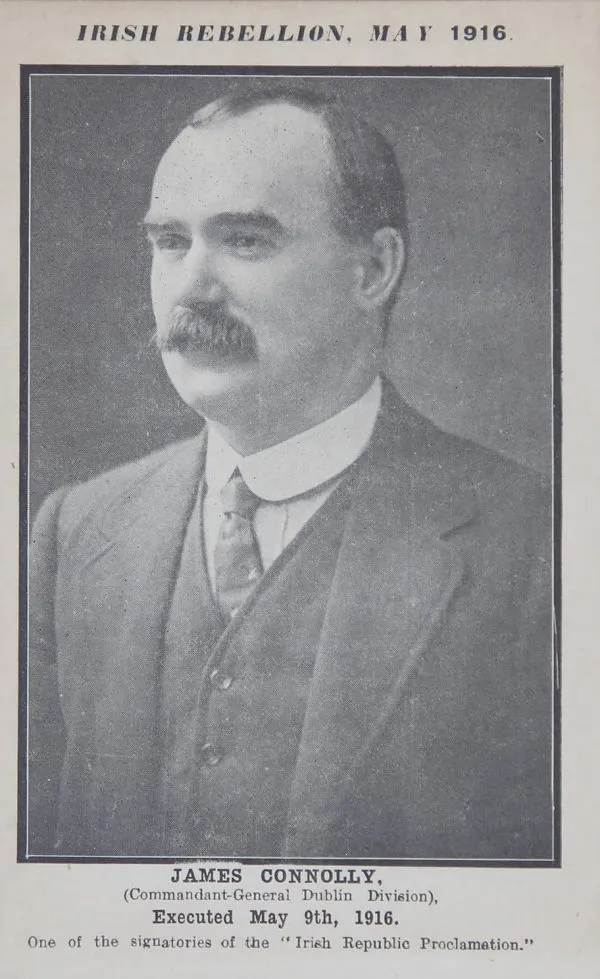 Photo: James Connolly, via macdonaghmuseum.ie
For the 1900 Olympics in Paris, American athletes were so strapped for cash that many competed in events they'd never tried before just to maximize their chances of winning something that might cover their travel expenses. Alvin Kraenzlein, a University of Pennsylvania student, won four gold medals in four different events partly because he needed the prize money.
The Secret Sauce: American Chaos
What Europe saw as American disorganization was actually America's greatest strength. While European athletes trained in formal, structured systems with rigid hierarchies, Americans were improvising everything.
American college athletes were competing year-round in multiple sports. A football player might also run track in the spring and play baseball in the summer. This cross-training created athletes with unusual combinations of skills and remarkable overall conditioning.
The American emphasis on innovation over tradition meant athletes and coaches were constantly experimenting with new techniques. While Europeans were perfecting classical methods, Americans were inventing entirely new approaches to training and competition.
Most importantly, the American system was producing athletes who were mentally prepared for anything. When you've had to organize your own transportation, fund your own trip, and figure out foreign customs on the fly, the pressure of Olympic competition doesn't seem quite so overwhelming.
When Amateurs Were Actually Amateur
The early Olympic era was the last time "amateur" actually meant amateur. These athletes had day jobs not because the rules required it, but because there was literally no way to make a living as an athlete.
Ray Ewry, who won 10 Olympic gold medals in standing jump events between 1900 and 1908, was a hydraulic engineer who trained during his lunch breaks. Archie Hahn, the sprint champion of the 1904 Olympics, was a law student who practiced starts by racing streetcars in Milwaukee.
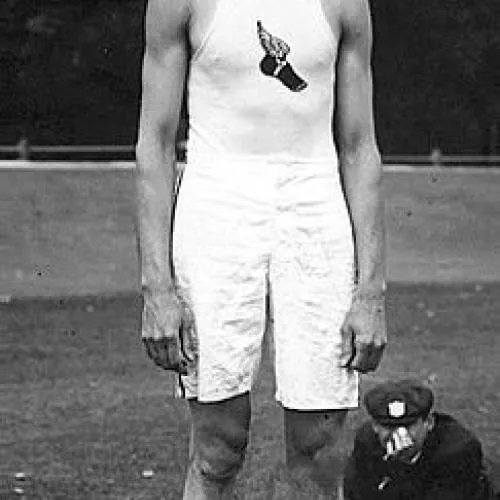 Photo: Ray Ewry, via heaven.world
This created a uniquely American athletic culture where excellence was pursued for its own sake, not for financial reward. Athletes trained hard because they loved competition, not because their livelihood depended on it.
The End of an Era
By the 1920s, this golden age of American amateurism was ending. Other countries began developing their own systematic approaches to Olympic preparation. The Soviet Union would later perfect the state-sponsored athlete model, while Western European countries developed sophisticated club systems.
America eventually professionalized its Olympic program too, establishing training centers, hiring full-time coaches, and developing the scientific approach to athletics that dominates today.
But for about three decades, America proved that the best way to produce Olympic champions might be to not try too hard to produce Olympic champions. Instead, create a culture where lots of people play lots of sports for the pure joy of it, and occasionally someone extraordinary will emerge.
The Lesson of the Mailman
Arthur Blake returned to Boston after his Olympic bronze medal and went back to delivering mail. He never competed internationally again, never cashed in on his Olympic success, never became a professional athlete or coach.
He just went back to being a regular guy who happened to be really fast.
In today's world of professional athletes, sports scientists, and million-dollar training facilities, Blake's story seems almost quaint. But it represents something profound about what sport can be when it's truly democratic — when excellence emerges not from systems designed to produce it, but from a culture that simply values trying your best.
The early American Olympians remind us that before sport became an industry, it was just people seeing how fast they could run, how far they could jump, and how much they could lift. And sometimes, that was more than enough to conquer the world.