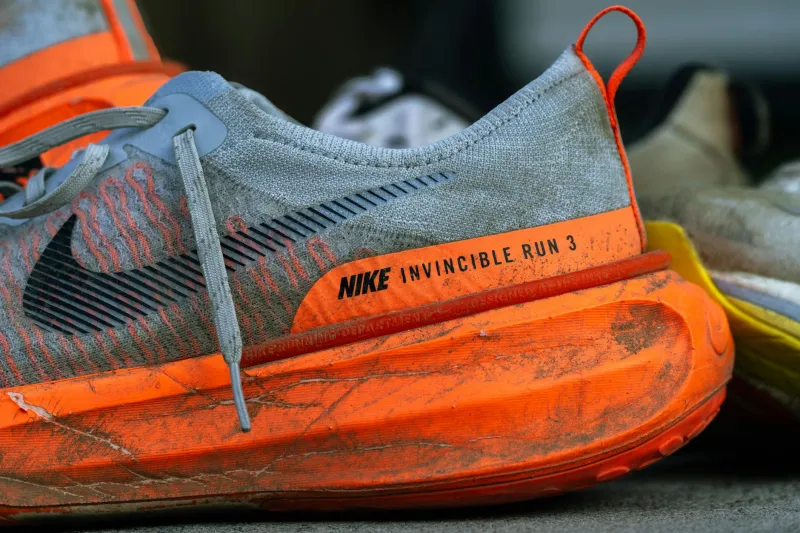
The Day Running Changed Forever
On October 12, 2019, something extraordinary happened in Vienna's Prater Park. Eliud Kipchoge became the first human to run a marathon in under two hours, covering 26.2 miles in 1:59:40. The achievement was hailed as one of the greatest athletic accomplishments in history—a barrier broken that many thought was impossible.
 Photo: Eliud Kipchoge, via marathonhandbook.com
But there was a catch. On Kipchoge's feet were Nike's controversial Vaporfly shoes, packed with carbon-fiber plates and foam technology that some critics argued gave him an unfair advantage. The shoes were so effective that World Athletics eventually had to create new regulations just to keep footwear from completely rewriting the record books.
This wasn't just about one runner or one race. It was the culmination of a 3,000-year arms race between human ambition and technology—a race that started with ancient Greeks running barefoot on packed earth and has ended with modern athletes strapping rocket ships to their feet.
When Feet Were All You Had
To understand how revolutionary modern running shoes really are, you have to start at the beginning: with absolutely nothing on your feet.
Ancient Olympic runners competed completely barefoot on a track made of packed sand and clay. No cushioning, no energy return, no technological assistance whatsoever. Just skin, muscle, bone, and raw determination.
This wasn't a primitive oversight—it was a deliberate choice. The ancient Greeks believed that athletic achievement should come from the human body alone, without artificial enhancement. They wanted to see what people could do when stripped of everything except their natural abilities.
The track at ancient Olympia was roughly 200 meters long, and the fastest runners could cover that distance in about 20-22 seconds. That's impressive, but it's also about 2-3 seconds slower than what modern high school athletes routinely run today. Part of that difference comes from better training and nutrition, but a significant portion comes from what's on their feet.
The Leather Age: When Shoes Were Boats
The first modern Olympic Games in 1896 saw a dramatic departure from ancient tradition: athletes wore shoes. But calling them "running shoes" is generous—they were essentially modified dress shoes made of leather that weighed nearly a pound each.
These early athletic shoes were handcrafted by local cobblers who had no understanding of biomechanics or athletic performance. They were heavy, rigid, and about as scientifically designed as a brick. Runners basically strapped miniature boats to their feet and hoped for the best.
The winning marathon time at those 1896 Olympics was 2:58:50—nearly an hour slower than Kipchoge's sub-two-hour performance. While training methods and athlete development explain much of that gap, the footwear difference is staggering. Modern marathon shoes weigh less than half what those 1896 leather contraptions did, and they return energy with every step instead of absorbing it.
The Spike Revolution
The first major breakthrough came in the 1920s with the development of spiked running shoes. Companies like Adidas (founded by Adolf "Adi" Dassler) began creating shoes specifically designed for athletic performance rather than general wear.
These early spikes were still leather, but they were lighter and included metal spikes that could grip the track surface. For the first time, runners had shoes that actually helped their performance instead of hindering it.
Jesse Owens wore Dassler spikes when he won four gold medals at the 1936 Olympics, running 100 meters in 10.3 seconds. That time stood as a benchmark for decades and demonstrated what was possible when human talent combined with thoughtfully designed equipment.
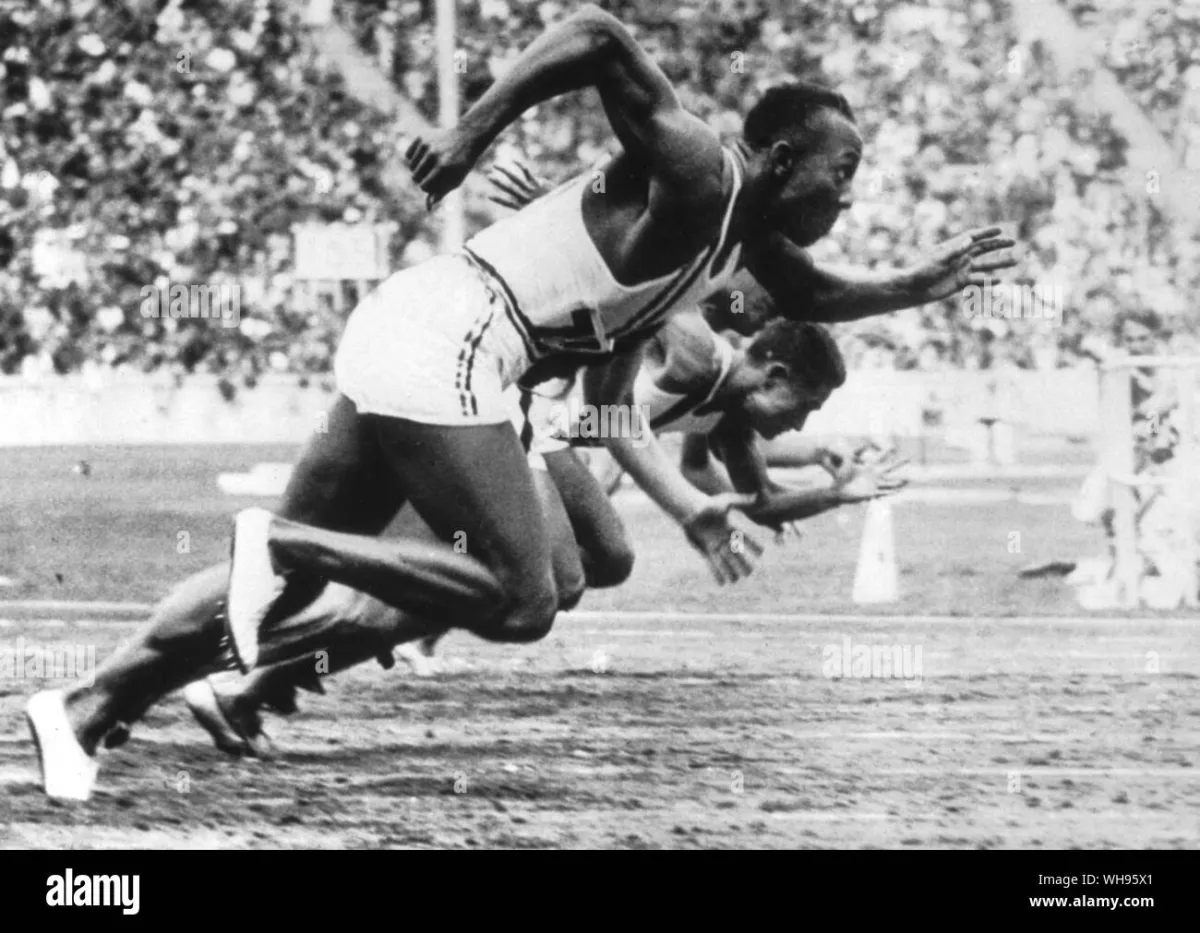 Photo: Jesse Owens, via c8.alamy.com
The Cushioning Wars Begin
The 1970s marked the beginning of the modern running shoe industry. Nike's founding in 1971 coincided with the American running boom, and suddenly companies were competing to create shoes that didn't just protect feet but actively improved performance.
The introduction of air cushioning, gel inserts, and specialized foam materials transformed running from a sport where you simply endured foot pain to one where shoes could actually make you faster and more comfortable. Bill Bowerman, Nike's co-founder and a legendary track coach, famously created the first waffle-soled running shoe by pouring rubber into his wife's waffle iron.
By the 1980s, running shoes had become sophisticated pieces of engineering. They featured different densities of foam, motion control systems, and materials designed to provide both cushioning and energy return. Runners were no longer just buying protection for their feet—they were buying performance enhancement.
Enter the Super Shoe Era
The real revolution began in 2016 when Nike introduced the Vaporfly 4%. The shoe featured a carbon-fiber plate embedded in ultra-light foam that acted like a spring, returning energy with each footstrike. Early testing suggested the shoes could improve running economy by up to 4%—hence the name.
Four percent might not sound like much, but in elite distance running, it's enormous. A 4% improvement in a 2:05 marathon equals about five minutes—the difference between winning Olympic gold and not even making the team.
The results were immediate and dramatic. Between 2016 and 2020, nearly every major marathon record fell to runners wearing Vaporfly shoes or their successors. The Boston Marathon qualifying times had to be adjusted because so many recreational runners were suddenly running faster than ever before.
The Numbers Don't Lie
To understand the scale of this technological revolution, consider the marathon world record progression:
- 1908: 2:55:18 (leather shoes on rough roads)
- 1969: 2:08:33 (early modern running shoes)
- 2018: 2:01:39 (Nike Vaporfly)
- 2023: 2:01:09 (Nike Alphafly)
That's nearly 55 minutes of improvement over 115 years, with the most dramatic gains coming in the super shoe era. The current world record holder, Kelvin Kiptum, ran his record-breaking 2:00:35 marathon wearing shoes that weigh just 6.7 ounces and contain technology that would have seemed like science fiction to runners just a decade ago.
The Cheating Question
This brings us to the uncomfortable question that's dividing the running world: at what point does equipment stop assisting an athlete and start replacing their effort?
Critics argue that modern super shoes have fundamentally changed the sport. They point out that every major distance running record set in the past five years has involved athletes wearing carbon-plated shoes. They question whether we're still watching human athletic achievement or technological demonstration.
Defenders counter that equipment evolution has always been part of sports. They argue that better shoes are no different from improved training methods, nutrition science, or track surfaces—all technological advances that have helped athletes run faster over the decades.
World Athletics Draws the Line
In 2020, World Athletics (the sport's governing body) was forced to create new regulations limiting shoe technology. The rules now specify maximum sole thickness, restrict the number of carbon plates, and require that any shoe used in competition be commercially available.
These regulations represent an acknowledgment that shoe technology had reached a point where it was fundamentally altering competitive balance. But they also raise deeper questions about the role of technology in sport and where we should draw the line between assistance and enhancement.
What Ancient Greeks Would Think
The ancient Greeks who ran barefoot at Olympia would probably be baffled by our modern footwear debates. They believed athletic competition should test pure human ability, unenhanced by artificial aids.
But they also lived in a world where the fastest human could barely break 20 seconds for 200 meters, where marathon running was an impossible dream, and where athletic careers ended in injury far more often than they do today.
Modern super shoes have enabled performances that push the boundaries of human potential while protecting athletes from the devastating injuries that ended many ancient careers. The question isn't whether this is good or bad—it's whether we're comfortable with what we've gained and what we've given up.
The Future of Feet
The shoe technology arms race shows no signs of slowing down. Companies are experimenting with new materials, different plate configurations, and even more advanced energy-return systems. Some researchers are exploring shoes that could provide real-time feedback or adjust their characteristics mid-race.
We're approaching a future where the limiting factor in running performance might not be human physiology but the regulations governing what athletes can wear on their feet.
Why This All Matters
The evolution from barefoot ancient Greeks to carbon-plated modern runners tells a larger story about human nature and athletic achievement. We've always sought to push the boundaries of what's possible, whether through training, nutrition, or technology.
The shoe debate forces us to confront fundamental questions about sport: Are we trying to see what the human body can accomplish, or are we trying to see what human creativity combined with technology can achieve? Is there a meaningful difference between those two goals?
Every time a runner laces up a pair of super shoes, they're participating in a 3,000-year conversation about the relationship between human ability and technological assistance. The ancient Greeks chose one answer to that question. We're still figuring out ours.
The only thing we know for certain is that whatever shoes runners are wearing in 2050, they'll make today's super shoes look as primitive as those leather boats from 1896. And they'll probably spark the exact same debates about fairness, technology, and what it really means to run fast.