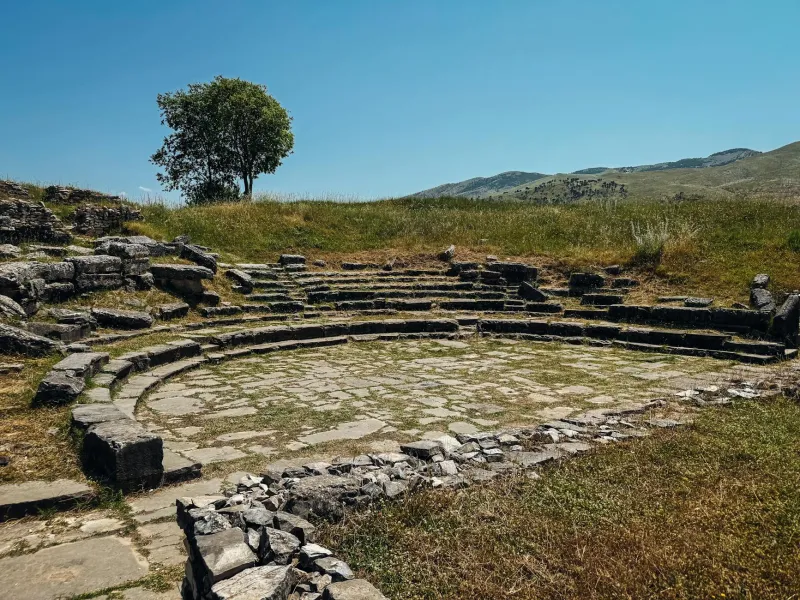
Close your eyes and imagine watching sports in ancient Greece. You're sitting on a grassy hillside in Olympia, surrounded by 40,000 other spectators who've traveled from across the Mediterranean world. There are no concession stands, no jumbotrons, no luxury boxes—just you, the athletes, and the raw energy of competition under the open sky. Fast-forward 2,800 years, and you're in a climate-controlled stadium that cost more than most countries' annual budgets, watching the same basic human drama play out with billion-dollar production values.
The evolution of sports venues tells the story of civilization itself: how we gather, what we value, and how technology shapes our most primal entertainment. From sacred Greek hillsides to Roman engineering marvels to today's smart stadiums, the places where we watch sports reveal as much about us as the games themselves.
Where It All Began: Olympia's Sacred Theater
The original Olympic stadium wasn't really a stadium at all—it was a sacred grove dedicated to Zeus, where athletic competition served religious purposes as much as entertainment. The track itself was simply a straight line about 200 meters long, marked by stone posts at each end. Spectators sat on natural hillsides that provided perfect sightlines to the action below.
This wasn't accidental. The Greeks understood something fundamental about sports spectatorship: the energy of the crowd is part of the performance. By arranging spectators in a natural amphitheater around the competition area, they created an intimate connection between athletes and audience that modern stadium designers still try to replicate.
The ancient Olympic venue could hold around 40,000 spectators—roughly the same capacity as many modern stadiums. But the experience was radically different. There were no assigned seats, no tickets, no security checkpoints. People simply showed up, found a spot on the hillside, and became part of a temporary community united by their love of athletic excellence.
Wealth and status certainly mattered in ancient Greece, but the stadium design was remarkably democratic. Rich and poor sat on the same hillsides, experiencing the same sun, rain, and dust. The only separation was gender—women were banned from most Olympic events, though they had their own separate competitions.
Roman Engineering: The First Modern Sports Experience
The Romans took Greek athletic concepts and supercharged them with engineering prowess that wouldn't be matched for over a thousand years. The Colosseum, completed in 80 AD, remains one of the most sophisticated sports venues ever constructed, featuring innovations that modern stadiums still use.
Roman amphitheaters introduced several concepts that define sports venues today: multiple levels of seating with clear social stratification, sophisticated crowd control systems, and elaborate infrastructure for performer preparation. The Colosseum could seat 80,000 spectators across four distinct levels, each reserved for different social classes. The emperor and nobility sat closest to the action, while common citizens occupied higher tiers.
But the real innovation was below ground. The Colosseum's hypogeum was essentially a massive backstage area with elevators, trapdoors, and staging areas that could transform the arena floor in minutes. Modern stadium designers study Roman engineering for good reason—they solved problems of crowd flow, sightlines, and spectacle management that remain relevant today.
Romans also pioneered the concept of venue amenities. While Greek spectators brought their own food and sat on hard stone, Roman venues featured food vendors, awnings for weather protection, and even primitive air conditioning systems that sprayed perfumed water on hot days.
The Medieval Gap: When Venues Disappeared
After Rome's fall, purpose-built sports venues essentially vanished from Europe for nearly a thousand years. Medieval athletic competitions took place in town squares, castle courtyards, or open fields—wherever space allowed. This wasn't just about economics; it reflected a fundamental shift in how society viewed organized sports.
Without centralized governments capable of massive construction projects, and with the Catholic Church viewing athletic spectacles as potentially pagan, the infrastructure for large-scale sports entertainment simply disappeared. When athletic competitions did occur, they were often military training exercises or religious festivals rather than pure entertainment.
This thousand-year gap helps explain why the revival of modern Olympic Games felt so revolutionary. By the late 1800s, Western society had largely forgotten what purpose-built athletic venues could accomplish.
The Modern Revival: Victorian Innovation Meets Ancient Inspiration
The first modern Olympic Games in 1896 took place in Athens's Panathenaic Stadium, a marble reconstruction of an ancient Greek venue. But this backward-looking design was already obsolete. The future of sports venues was being written in places like London, New York, and Chicago, where Victorian engineers were creating the first modern stadiums.
Harvard Stadium, built in 1903, introduced reinforced concrete construction that allowed for much larger, safer structures than previous materials permitted. More importantly, it pioneered the bowl design that maximizes sightlines while creating the acoustic properties that amplify crowd noise—turning spectator energy into a competitive factor.
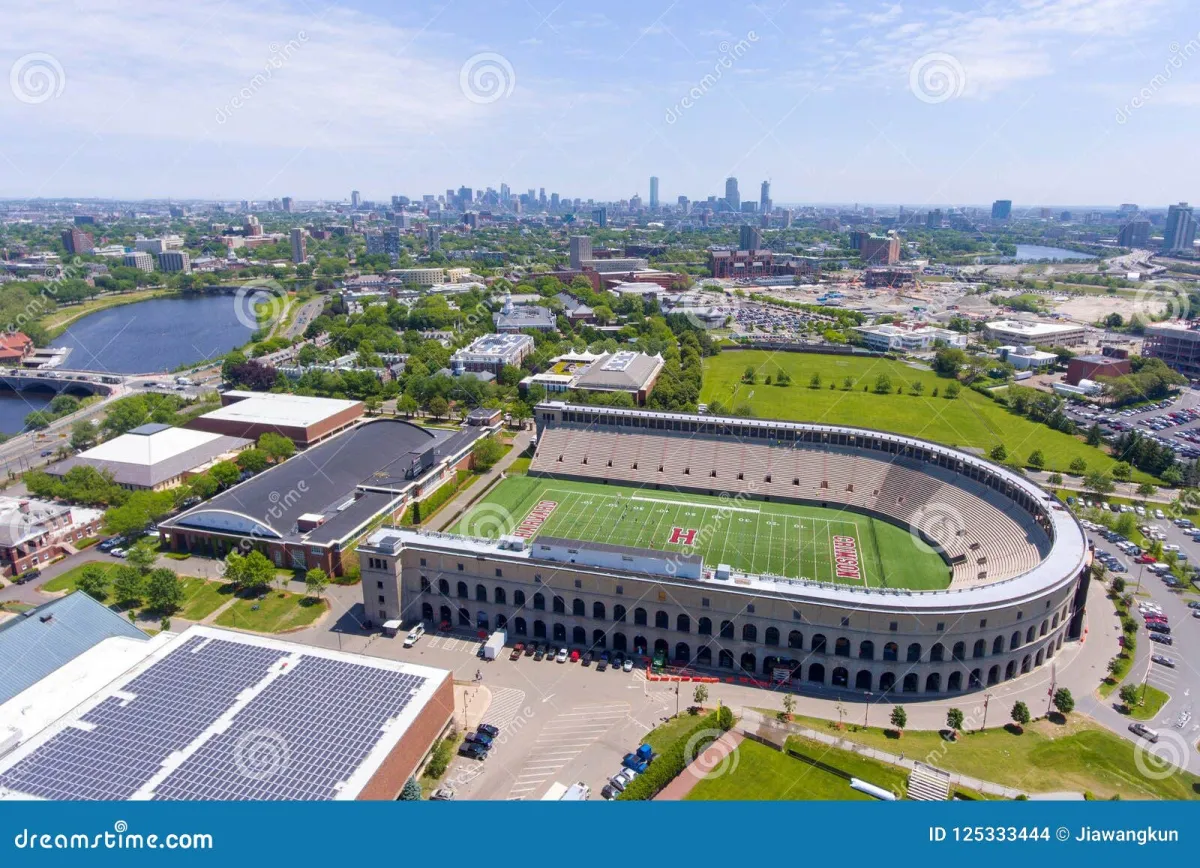 Photo: Harvard Stadium, via thumbs.dreamstime.com
Early 20th-century stadiums like Yale Bowl and the original Yankee Stadium established the template that dominated sports venue design for decades: large capacity, basic amenities, and a focus on bringing as many people as possible close to the action. These venues were democratic in spirit—cheap tickets meant working-class families could afford to attend—but primitive in execution compared to what would come later.
The Television Revolution: When Venues Competed With Living Rooms
Television changed everything about sports venue design, though the effects weren't immediately obvious. Early TV broadcasts simply showed what happened in existing stadiums, but gradually, venues began adapting to serve two audiences: the people physically present and the much larger audience watching at home.
This created tension that still defines modern stadium design. Features that enhance the TV experience—like massive video boards and elaborate lighting systems—don't necessarily improve the live experience. Meanwhile, amenities that make attending games more comfortable—like wider concourses and better food options—don't translate to television.
The 1970s and 1980s saw the first generation of stadiums designed specifically for the television age. These venues prioritized camera angles, broadcast infrastructure, and corporate hospitality over the intimate crowd energy that defined earlier eras. The result was often sterile environments that looked great on TV but felt disconnected in person.
Corporate Cathedrals: The Luxury Box Era
The 1990s introduced a new model: stadiums as corporate entertainment centers rather than just sports venues. This shift reflected broader economic changes in professional sports, where television revenue and corporate sponsorship became more important than ticket sales.
New stadiums featured extensive luxury box areas, club seating, and premium amenities that created distinct experiences for different economic classes. AT&T Stadium in Dallas, which opened in 2009, represents the extreme endpoint of this philosophy: a $1.3 billion facility with a retractable roof, massive video screens, and luxury amenities that rival five-star hotels.
These venues are impressive engineering achievements, but they've moved far from the democratic ideals of ancient Greek stadiums. The average fan experience often feels secondary to corporate entertainment needs, creating venues that are technically superior but emotionally distant.
Smart Stadiums: The Digital Revolution
Today's newest sports venues are essentially giant computers wrapped in steel and concrete. Mercedes-Benz Stadium in Atlanta features over 2,000 miles of fiber optic cable, app-controlled concession ordering, and facial recognition entry systems. These venues can personalize the experience for individual fans while gathering unprecedented data about crowd behavior and preferences.
The technology is impressive, but it raises questions about what sports venues should actually accomplish. Are we creating better ways to watch sports, or just more ways to distract from the fundamental human drama that made ancient Greeks sit on hillsides for hours?
Modern venue designers are increasingly trying to recapture some of the intimacy and energy that characterized ancient stadiums. Features like steep seating angles, reduced capacity for better sightlines, and emphasis on crowd noise all echo principles that Greek architects understood instinctively.
What Never Changes
Despite 2,800 years of technological advancement, the fundamental appeal of live sports remains constant: the unpredictable drama of human competition experienced in community with others. Whether you're on a Greek hillside or in a billion-dollar stadium, you're participating in the same basic human ritual.
The best modern venues understand this continuity. They use technology and luxury amenities to enhance rather than replace the core experience of watching great athletes compete at the highest level. The worst modern venues lose sight of this fundamental purpose, creating elaborate distractions from the sports themselves.
As we look toward the future of sports venues—with virtual reality, augmented reality, and even more sophisticated technology on the horizon—the lesson from 2,800 years of evolution is clear: the venue serves the sport, not the other way around. The most successful sports venues, from ancient Olympia to modern stadiums, create environments where human athletic excellence can be appreciated and celebrated.
The Greeks got something right when they carved their stadium into a natural hillside and invited the world to watch. Every innovation since then has been an attempt to recreate that magic on a larger, more sophisticated scale. Sometimes we succeed. Sometimes we get distracted by our own cleverness. But the goal remains the same: creating the perfect theater for the greatest show on earth—human beings pushing the limits of what's possible.