When Death Was the Price of Watching: How Women Crashed the Ultimate Boys' Club
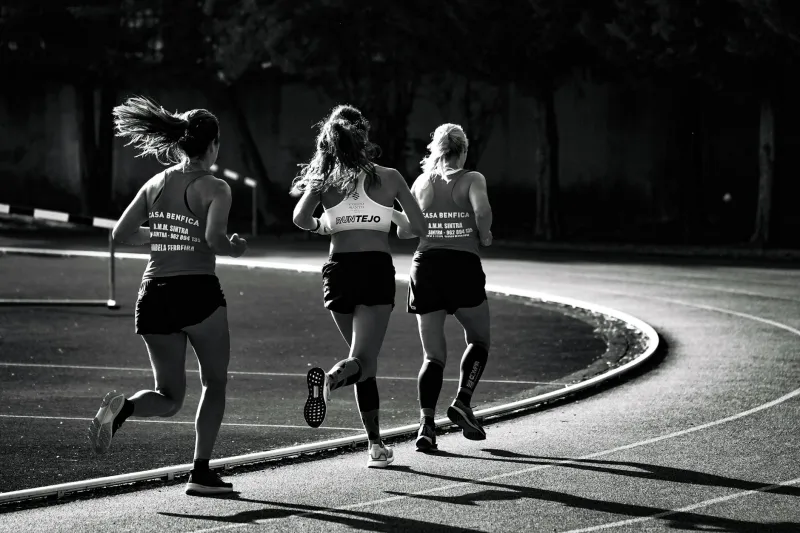
Picture this: you're a woman in ancient Greece, and the penalty for sneaking a peek at the Olympic Games isn't a fine or a stern warning—it's being hurled off a cliff to your death. That was the reality for nearly twelve centuries of Olympic competition, where the Games weren't just male-dominated but literally lethal for women to witness.
Yet somehow, against impossible odds, women fought their way from complete exclusion to claiming 48% of Olympic spots at the Tokyo 2021 Games. The story of how that happened isn't just about sports—it's about revolution, one race at a time.
The Ancient Ban That Started It All
The original Olympic Games, which ran from 776 BC to 393 AD, weren't just excluding women from competition—they were banning them from existence during the entire festival. Married women caught watching the Games faced execution by being thrown from Mount Typaion. The only exception? Unmarried women, who could attend as potential brides for the victorious athletes.
This wasn't casual discrimination. This was systematic erasure backed by religious law. The Games honored Zeus, and the all-male priesthood declared female presence would contaminate the sacred competition. Athletes competed nude, ostensibly to honor the gods, but the nudity also served as the ultimate gender checkpoint.
Yet even then, cracks appeared in the wall. Cynisca of Sparta became the first woman to win an Olympic event in 396 BC—as a chariot owner, not a competitor. She couldn't even attend her own victory ceremony, but her name was carved in stone at Olympia. It was a loophole victory that proved women were already strategizing their way into Olympic history.
The 1,500-Year Wait
When Pierre de Coubertin revived the Olympics in 1896, he imported more than just the competitive spirit of ancient Greece—he brought the gender exclusion too. "The Olympic Games must be reserved for men," Coubertin declared, calling female participation "impractical, uninteresting, unaesthetic, and incorrect."
The first modern Olympics featured 241 male athletes and zero women. Not a single female competitor crossed the starting line in Athens. It was ancient Olympia all over again, minus the death threats.
But women weren't waiting around for permission this time.
The Crack in the Wall: Paris 1900
Four years later in Paris, something unprecedented happened. Twenty-two women competed in the 1900 Olympics—not because the Olympic Committee welcomed them, but because the Games were so disorganized that women's events slipped through the cracks.
Charlotte Cooper of Britain became the first female Olympic champion, winning tennis singles and mixed doubles. Margaret Abbott, an American golfer, won the women's golf tournament without even realizing she was competing in the Olympics. The event was so poorly marketed that Abbott thought she was playing in a regular French tournament.
These weren't official Olympic moments in the eyes of organizers—they were accidents that became history.
The Slow March Forward
Progress came in painful increments. By 1912, women could compete in swimming events, but only because swimming officials threatened to boycott if women weren't included. Track and field, the crown jewel of Olympic competition, remained male-only until 1928.
When women's track and field finally debuted in Amsterdam, it nearly ended before it started. Several runners collapsed after the 800-meter race—not from any inherent female weakness, but from lack of proper training opportunities. The media hysteria was immediate: women were "too fragile" for distance running. The 800m was banned for women until 1960, a 32-year punishment for one dramatic finish.
The American Breakthrough
The real turning point came from an unexpected source: American college athletics. Title IX, passed in 1972, didn't just change American sports—it created a pipeline of female athletes who would dominate international competition.
Suddenly, American women had the training, facilities, and competitive opportunities that had been denied for generations. The results were immediate and dramatic. At the 1984 Los Angeles Olympics, American women won 67 medals, more than most entire countries.
Joan Benoit's marathon victory that year was particularly symbolic. She won the first women's Olympic marathon—the same distance that had been used to justify excluding women from distance running for decades.
The Numbers Tell the Story
The transformation has been staggering:
- 1896: 0% female participation
- 1900: 2.2% female participation
- 1952: 10.5% female participation
- 1984: 23% female participation
- 2021: 48% female participation
Today's Olympics feature women competing in sports that would have been unthinkable even fifty years ago: boxing, weightlifting, ski jumping, and combat sports. The 2021 Tokyo Olympics included more female athletes than any previous Games, with women competing in 46% of all events.
What Changed Everything
Three factors broke down the barriers that had stood for millennia:
Legal pressure: Title IX and similar legislation worldwide forced institutions to provide equal opportunities, creating the training infrastructure women needed to excel.
Media coverage: Television audiences wanted to watch compelling athletes regardless of gender, and female competitors delivered dramatic, record-breaking performances that were impossible to ignore.
Performance proof: Women didn't just participate—they shattered assumptions about human athletic potential. When Florence Griffith-Joyner ran 10.49 seconds in the 100m in 1988, she proved that female athletes could produce performances that captivated global audiences.
The Revolution Continues
The 2024 Paris Olympics will be the first in history to achieve complete gender parity—50% male, 50% female participation. It's a milestone that would have been incomprehensible to the ancient Greeks who built the first Olympic stadiums.
Yet the fight isn't over. Women's sports still struggle for equal media coverage, prize money, and sponsorship opportunities. The infrastructure exists now, but true equality remains a work in progress.
From death threats to global stardom in just over a century—the story of women in the Olympics proves that the most dramatic athletic records aren't always about running faster or jumping higher. Sometimes they're about showing up when the world says you don't belong, and refusing to leave until the game changes forever.