When America's First Marathon Hero Fell Short of Glory by 100 Yards
The Man Who Almost Made History
On April 19, 1897, fifteen men lined up in Ashland, Massachusetts, for what would become the most famous marathon in America. Among them stood John J. McDermott, a 23-year-old lithographer from New York who had already made his mark as America's first marathon champion just months earlier. But on this Patriots' Day, with crowds gathering along the 24.5-mile route to Boston, McDermott would experience both triumph and heartbreak in a way that perfectly captured the raw, unforgiving nature of early American distance running.
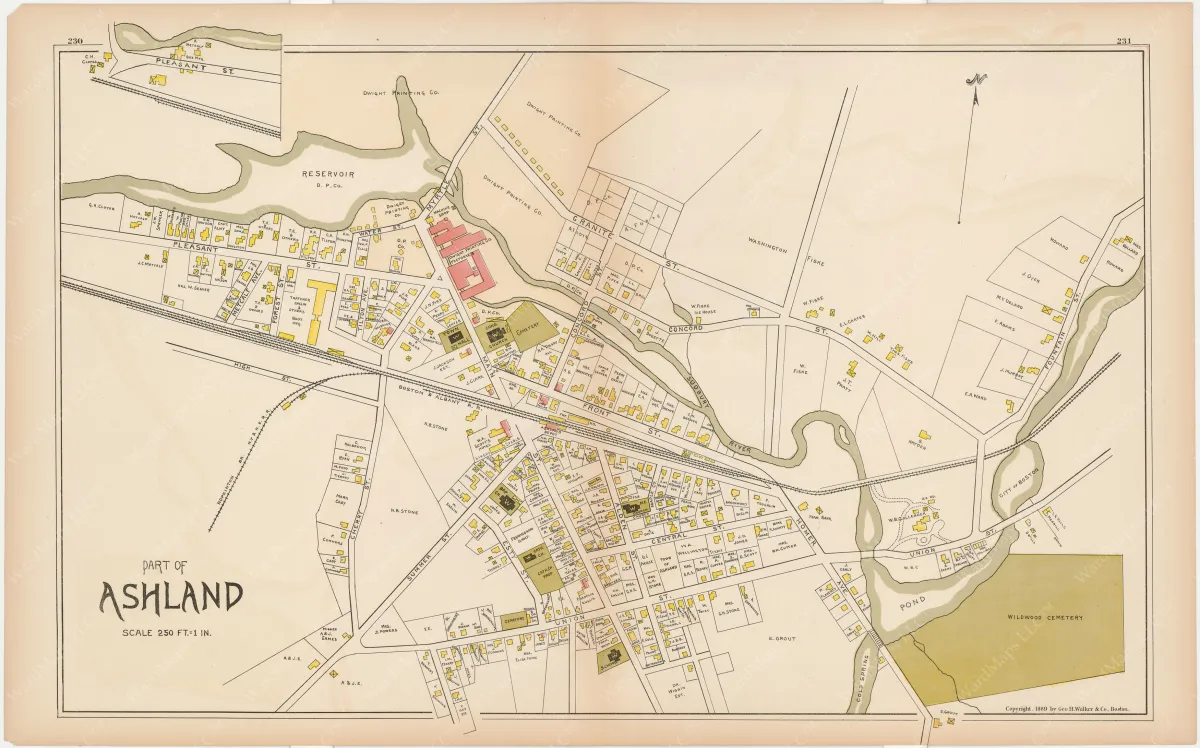 Photo: Ashland, Massachusetts, via wardmaps.com
 Photo: John J. McDermott, via www.maggslawnj.com
McDermott had won the first Boston Marathon the previous year in 2:55:10 – a time that seems almost leisurely compared to today's elite performances that clock in around 2:05. But context matters. These pioneers ran on roads that would make modern athletes weep: cobblestones, dirt paths, and whatever surface happened to connect point A to point B. They wore wool uniforms and leather shoes with minimal cushioning. There were no aid stations, no sports drinks, and certainly no understanding of hydration science.
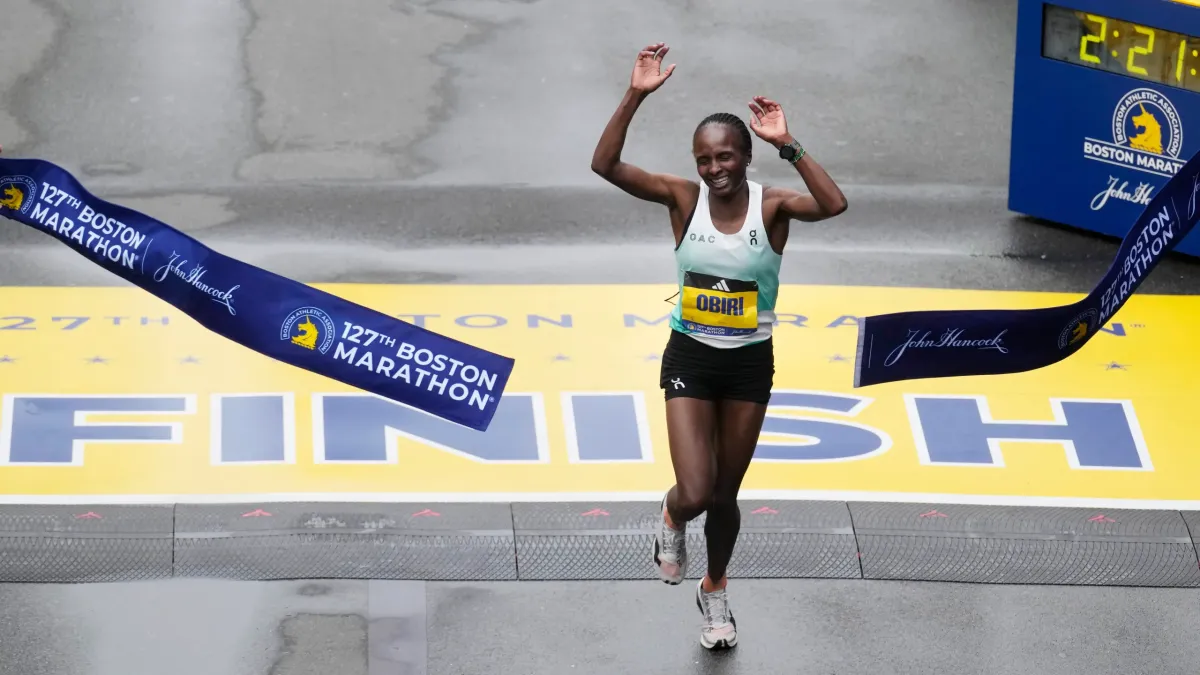 Photo: Boston Marathon, via marathonhandbook.com
Racing in a Different World
The 1897 Boston Marathon tells us everything about how dramatically marathon running has evolved. McDermott started strong, building a commanding lead through the early miles. Spectators lined the route, many seeing their first marathon runners – these strange men who had chosen to run a distance most Americans considered borderline insane.
Unlike today's Boston Marathon, which attracts 30,000 runners with qualifying standards and scientific training regimens, this race featured just 15 competitors. Most were working-class men who trained around their day jobs. McDermott himself worked as a lithographer, squeezing in training runs before and after long days at the printing press.
The route itself would shock modern runners. No smooth asphalt, no carefully measured mile markers, no medical stations every few miles. These men ran on whatever roads existed, dealing with horse-drawn carriages, pedestrians, and surfaces that ranged from packed dirt to loose gravel.
The Collapse That Defined an Era
With less than half a mile to go, McDermott held a substantial lead. The finish line on Irvington Street was within sight. Thousands of spectators had gathered to witness what seemed like certain victory for America's marathon pioneer.
Then his body simply gave out.
McDermott collapsed roughly 100 yards from the finish line, his legs refusing to carry him another step. In those final moments, he watched as Hamilton Gray passed him to claim victory. Gray's winning time of 2:53:43 was nearly two minutes faster than McDermott's previous course record, but for McDermott, those numbers meant nothing as he struggled to even stand.
This wasn't unusual for early marathon running. The human body's limits weren't well understood, and the concept of pacing was primitive at best. Runners often pushed themselves to complete physical breakdown, viewing collapse as almost inevitable rather than preventable.
From Wool Uniforms to Space-Age Science
Compare McDermott's experience to today's Boston Marathon elite field. Modern marathon champions arrive with teams of coaches, nutritionists, and sports scientists. Their pre-race preparation involves months of altitude training, carefully calibrated workouts, and nutrition plans calculated down to the gram.
Where McDermott ran in heavy wool clothing, today's runners wear moisture-wicking fabrics that weigh ounces. His leather shoes have been replaced by carbon fiber plates and advanced foam compounds that can improve efficiency by 4%. The cobblestone streets he navigated are now smooth asphalt with precisely measured mile markers and elevation profiles studied like military intelligence.
Most remarkably, today's elite marathoners run nearly 50 minutes faster than McDermott's best time. The current Boston Marathon course record stands at 2:03:02 – a pace that would have seemed superhuman to those 1897 competitors.
The Spirit That Never Changed
Yet something essential connects McDermott to today's marathon champions. That willingness to push beyond comfortable limits, to test the boundaries of human endurance, remains unchanged. Whether running on cobblestones in wool uniforms or smooth asphalt in carbon fiber shoes, marathon runners still face that same fundamental question: how far can the human spirit carry a failing body?
McDermott eventually recovered from his 1897 collapse and continued competing. He never won Boston again, but his legacy lived on in the growing popularity of distance running in America. Those early marathons, brutal and unforgiving as they were, planted the seeds for what would become a national obsession.
Today, over 30,000 runners apply for roughly 20,000 spots in the Boston Marathon. They train with GPS watches, heart rate monitors, and detailed knowledge of exercise physiology. But they're all chasing the same thing McDermott chased in 1897: the chance to test themselves against a distance that demands everything and promises nothing except the opportunity to discover what lies beyond their limits.
The marathon has evolved from a handful of working-class pioneers to a global phenomenon, but at its core, it remains what it was when John McDermott collapsed 100 yards from glory: the ultimate test of human determination against the unforgiving mathematics of 26.2 miles.