The American Sport That Knocked on the Olympic Door — and Got Left on the Porch
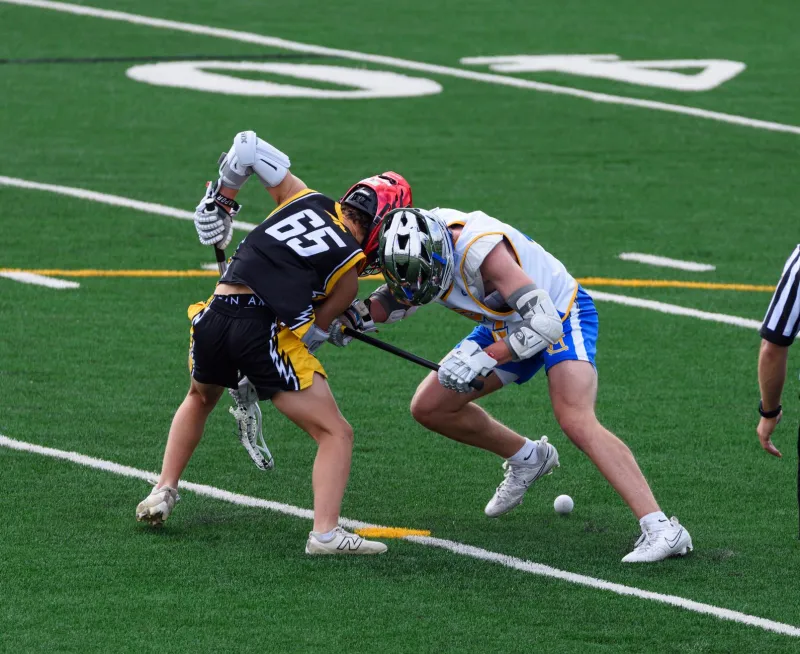
Somewhere in the gap between sports that belong in the Olympics and sports that actually make it in, you'll find lacrosse — a game with deeper roots in North American soil than baseball, basketball, or any other sport Americans typically claim as their own.
Lacrosse wasn't invented in a gym or codified by a committee. It was played by Indigenous nations across the continent for centuries before European contact, functioning as a spiritual practice, a conflict resolution mechanism, and a form of physical conditioning all at once. The Haudenosaunee — the Iroquois Confederacy — called it the Creator's Game. That's not marketing language. That's a cosmological claim about the sport's purpose.
And yet, despite this extraordinary heritage, despite two actual Olympic appearances, despite decades of lobbying and growing global participation, lacrosse spent most of the 20th century watching sports with a fraction of its history waltz into the Olympic program without breaking a sweat. How that happened tells you something important about how the Olympics actually work.
A Sport Older Than the Country That Loves It
When French missionaries encountered lacrosse being played in the Great Lakes region in the 17th century, they named it after the bishop's ceremonial staff — la crosse — because the stick vaguely resembled one. The Indigenous players probably found this characteristically presumptuous.
By the 19th century, Canadian settlers had adopted and modified the game, and it spread quickly through elite eastern US universities. Johns Hopkins, Syracuse, and Maryland became powerhouses. The sport built a devoted, if geographically concentrated, following across the Mid-Atlantic and New England states.
 Photo: Johns Hopkins, via logos-world.net
Lacrosse appeared in the Olympics twice in the early modern era — in 1904 in St. Louis and again in 1908 in London — as a demonstration or limited-entry event. It wasn't a full medal sport in the modern sense, but it was there. The door had been cracked open.
Then it closed.
The Olympic Selection Problem
To understand why lacrosse struggled to get back in, you need to understand how the International Olympic Committee decides what belongs on the program — and how those decisions have always been more political than athletic.
The ancient Greeks had a clear framework. Events in the original Olympics were selected because they reflected the civic and military virtues of Greek culture: running trained soldiers, wrestling prepared warriors, the discus and javelin were battlefield skills. The selection criteria were coherent and culturally legible. You could explain why every event was there.
The modern IOC has never had quite that clarity. The program has expanded and contracted based on a complicated mix of global participation numbers, television appeal, revenue potential, and the lobbying power of individual sports' governing bodies. It's less a philosophy than a negotiation.
Lacrosse's problem, for most of the 20th century, was that it failed on the participation metric. The IOC required sports seeking full Olympic status to demonstrate active competition across a minimum number of countries — a threshold that kept shifting upward as the IOC tried to manage program bloat. Lacrosse was enormously popular in the US, Canada, and a handful of other countries, but its global footprint was thin.
The Haudenosaunee Complication
The story gets more layered — and more politically charged — when you factor in the Haudenosaunee Nationals, the Indigenous team that competes internationally under the flag of the Iroquois Confederacy rather than any nation-state.
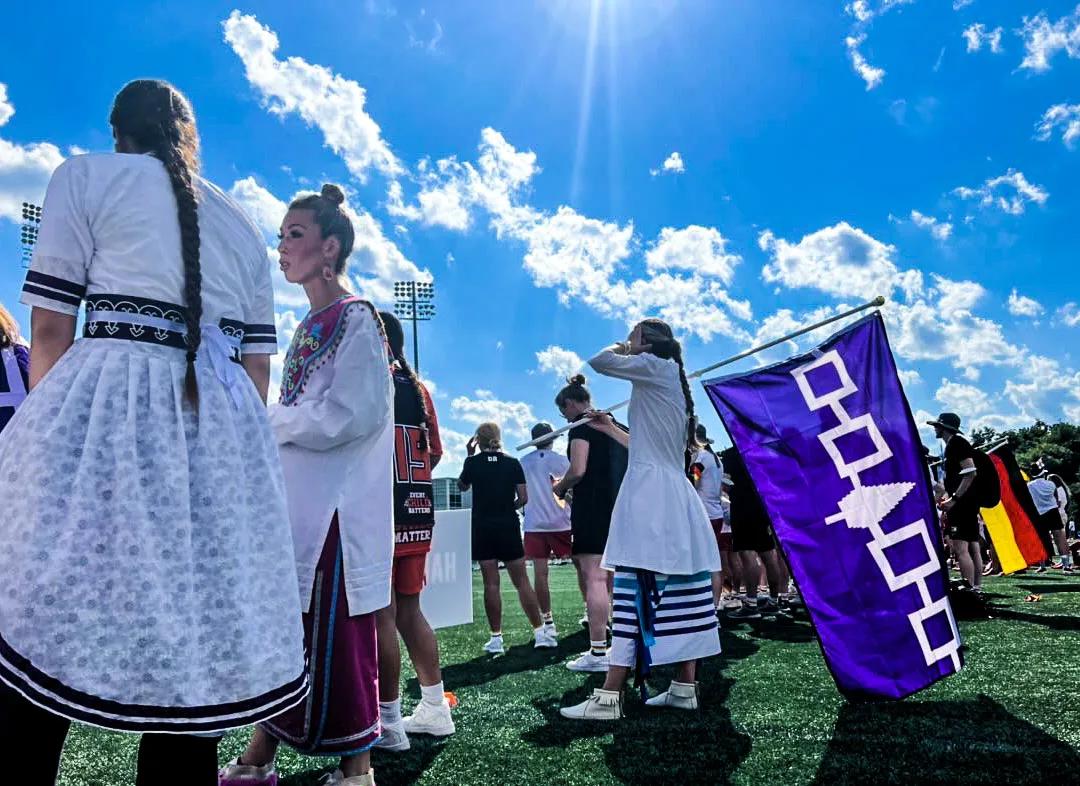 Photo: Haudenosaunee Nationals, via indianz.com
The Haudenosaunee are widely regarded as among the best lacrosse players in the world, with a legitimate ancestral claim to the sport that no other nation can match. But the IOC doesn't recognize the Confederacy as a national Olympic committee, which means Haudenosaunee players have historically faced an impossible choice: compete under a flag that isn't theirs, or don't compete at all.
This tension came to a head at the 2010 World Lacrosse Championship when US passport disputes prevented the Haudenosaunee team from traveling to the UK. The episode was embarrassing for everyone involved and underscored the degree to which Olympic and international sports governance was built around a model of nation-states that doesn't accommodate Indigenous sovereignty.
For a sport whose entire identity is rooted in Indigenous culture, being forced to navigate a bureaucratic framework that erases that identity is more than an inconvenience. It's a structural contradiction.
The Long Campaign — and the Breakthrough That Almost Wasn't
Through the 1990s and 2000s, US Lacrosse and the sport's international governing body ran sustained campaigns to restore Olympic status. Participation numbers were climbing. The women's game was growing rapidly. College lacrosse was exploding across the US, moving well beyond its northeastern stronghold into southern and western states.
The IOC kept saying not yet. Other sports — golf, rugby sevens — jumped the queue, partly because of their global television footprints and partly because of the financial weight their governing bodies could bring to lobbying efforts.
Lacrosse was finally granted a significant breakthrough when it was selected for the 2028 Los Angeles Olympics — a decision that felt both overdue and strategically convenient, given that the Games will be held on American soil where the sport commands its largest audience. Sixes lacrosse, a faster, condensed version of the traditional field game, will be the format.
 Photo: 2028 Los Angeles Olympics, via media.nbclosangeles.com
It's a win. But it took over a century.
What the Selection Process Actually Reveals
The lacrosse saga forces a genuinely uncomfortable question: are the right sports in the Olympics?
The ancient Greeks would have found the modern program baffling in places. Synchronized diving and rhythmic gymnastics would have required some explaining. But they would have understood the underlying principle — that the events selected should reflect something meaningful about human physical excellence and cultural value.
Lacrosse has a stronger claim to both than dozens of sports that have enjoyed uninterrupted Olympic status for generations. Its exclusion wasn't a verdict on the sport's quality. It was a verdict on the sport's politics.
That's worth sitting with the next time the opening ceremony rolls around and you find yourself wondering how some of those events ended up there.