When Winning Was Simple: The Complex Evolution of How We Keep Score in Sports
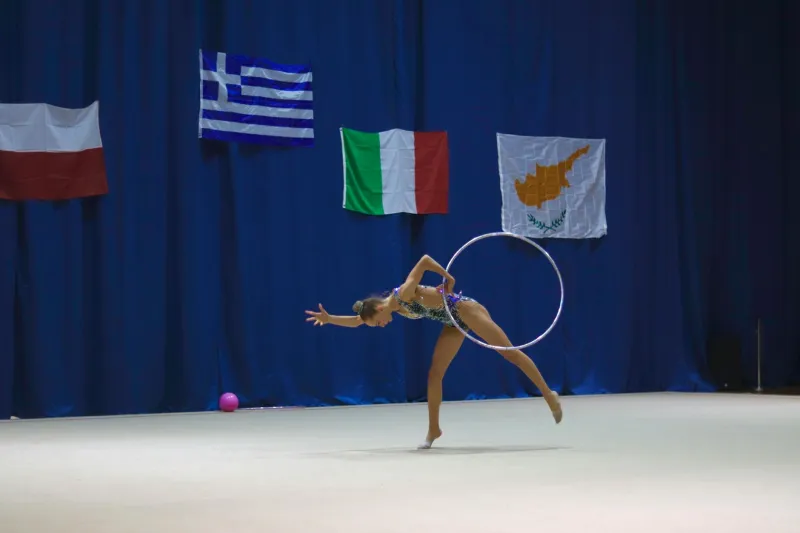
In 776 BC, determining the winner of the stadion race was refreshingly simple: whoever crossed the finish line first was crowned Olympic champion. There were no points, no judges' scores, no tiebreakers—just pure, unambiguous victory. Fast-forward to a modern Olympic gymnastics competition, where athletes' fates rest on decimal points calculated through byzantine formulas that even experienced coaches struggle to understand.
Somewhere along the way, sport lost its beautiful simplicity and gained something far more complicated.
The Brutal Clarity of Ancient Competition
Ancient Olympic events operated on a principle that would seem radical today: there could be only one winner. The stadion race, wrestling matches, and chariot races all followed the same format—compete until someone emerges victorious, then everyone else goes home empty-handed.
This wasn't cruelty; it was clarity. When Coroebus of Elis won that first recorded Olympic stadion in 776 BC, there was no question about his victory. He ran approximately 200 meters faster than anyone else that day, and that was that. No style points, no technical merit scores, no judges' interpretation—just the elemental truth of human competition.
 Photo: Coroebus of Elis, via img.freepik.com
The ancient Greeks did have some events that required judgment, like the pentathlon, but even these maintained brutal simplicity. Athletes competed in five events (stadion, long jump, discus, javelin, and wrestling), and the winner was determined through a process of elimination that continued until only one man remained undefeated.
When America Complicated Everything
The shift toward complex scoring began with the revival of the modern Olympics in 1896, but it accelerated dramatically as American influence grew in international sport. The United States, with its love of statistics and quantification, began introducing point systems that would have baffled ancient athletes.
Boxing was one of the first Olympic sports to embrace subjective judging, moving away from fights that continued until knockout or submission. Suddenly, victory could depend on scorecards filled out by officials who might see the same fight completely differently.
But the real complexity explosion came with gymnastics. What started as relatively straightforward demonstrations of strength and skill evolved into a scoring system so intricate that it requires computer calculations and multiple judges to determine a winner. Today's Code of Points in gymnastics is a 200-page document that gets revised every four years, creating a moving target that even elite coaches struggle to master.
The Decimal Point Revolution
Nothing symbolizes sport's move away from simple competition quite like the rise of decimal scoring. Ancient Greek athletes either won or lost—there was no such thing as winning by 0.033 points.
Figure skating epitomizes this transformation. What began as a demonstration of skating skill has become a sport where victories are decided by fractions of points awarded for technical elements with names like "triple Lutz-double toe loop combination." The infamous 2002 Olympic pairs scandal, where French and Russian judges allegedly fixed results, highlighted how subjective scoring can corrupt the pure competition that ancient Greeks revered.
Even track and field, which maintained its simple "fastest wins" format longer than most sports, eventually succumbed to complexity. The decathlon scoring system, developed in 1912 and refined multiple times since, converts raw performances into points using formulas that require advanced mathematics. An athlete might run faster, jump higher, and throw farther than a competitor but still lose based on the mathematical conversion.
The Strategy Game That Sport Became
Complex scoring systems didn't just change how we determine winners—they fundamentally altered how athletes compete. Ancient Olympians trained to be the fastest, strongest, or most skilled. Modern athletes often train to maximize points within specific systems.
In gymnastics, routines are now constructed like mathematical equations, with athletes and coaches calculating the optimal combination of elements to achieve the highest possible score. The artistry that once defined the sport has become secondary to technical point accumulation.
Diving provides another example of how scoring complexity changed competition. Ancient Greeks would have appreciated diving as a simple demonstration of courage and skill. Modern diving judges award separate scores for approach, takeoff, execution, and entry, creating a system where the most spectacular dive might not win if it lacks technical precision in one specific area.
The Controversy Machine
Complex scoring systems have created something ancient Olympics never had to deal with: endless controversy over results. When Coroebus won his stadion race, spectators might have disagreed about strategy or training methods, but they couldn't dispute the outcome. Today's sports generate constant debate about judging, scoring interpretations, and whether the right athlete won.
The 2016 Olympic all-around gymnastics final perfectly illustrated this problem. Simone Biles won gold, but the margin of victory was so slim that tiny variations in judges' scores could have changed the result. Ancient Greeks would have found this unsatisfying—how can the greatest athlete be determined by subjective decimal points?
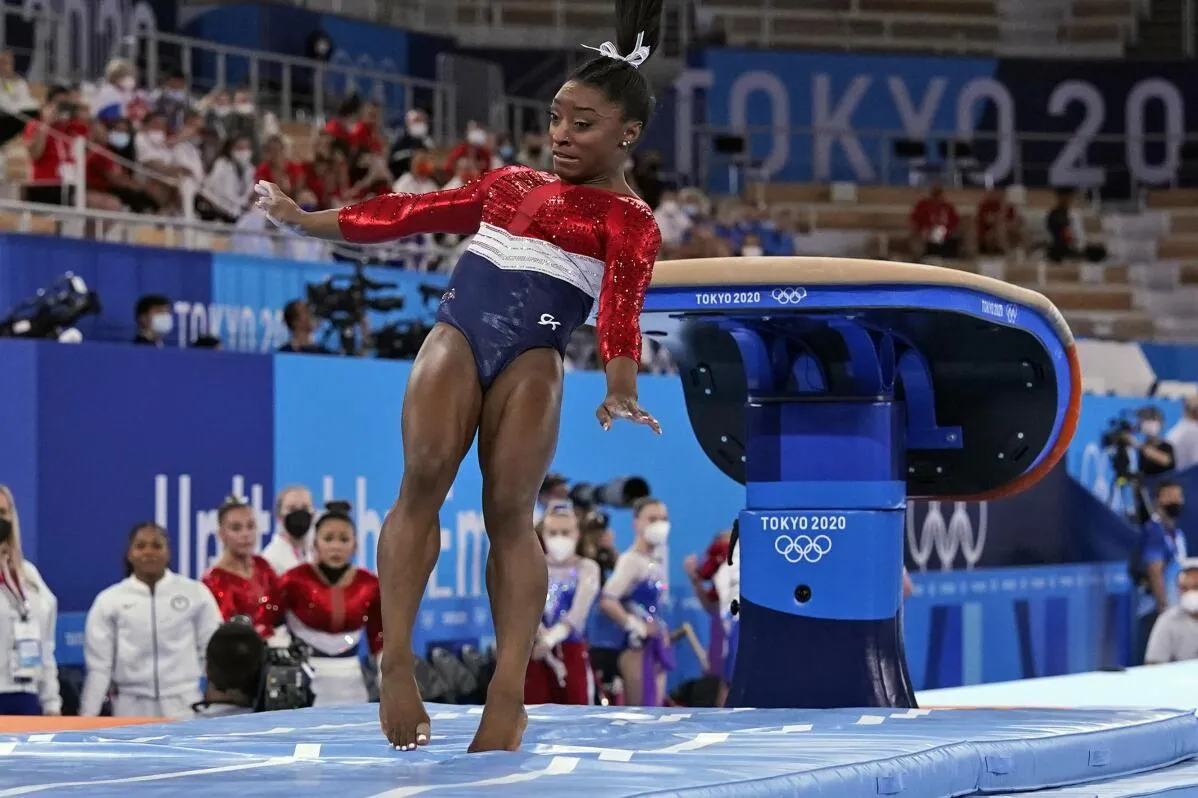 Photo: Simone Biles, via dims.apnews.com
What We Lost in Translation
The evolution from simple to complex scoring reflects broader changes in how we view competition. Ancient Olympics were religious festivals celebrating human excellence in its purest form. Modern Olympics are global entertainment spectacles where precise rankings and dramatic finishes drive television ratings.
There's something to be said for both approaches. Complex scoring systems allow for more nuanced evaluation of athletic skill and create opportunities for athletes in sports that don't have clear finish lines. But they've also moved us away from the elemental truth that made ancient competition so compelling.
The Digital Future of Scoring
Technology promises to make scoring even more complex. Artificial intelligence systems can now analyze athletic performances in ways human judges never could, measuring angles, speeds, and technical elements with superhuman precision. Some see this as the ultimate evolution of fair competition; others worry we're moving even further from sport's essential nature.
The ancient Greeks competed for olive wreaths and the honor of victory. Modern athletes compete for decimal point advantages in systems that require engineering degrees to fully understand. Both have their place in human culture, but there's something to be said for the brutal clarity of crossing a finish line first.
Perhaps the most honest question we can ask is this: in our quest to make sport more fair and precise, have we made it less true?
 Photo: Olympic Games, via image3.slideserve.com