Built for Everything, Optimized for Nothing: What Ancient Greek Athletes Reveal About the Decathlon Dream
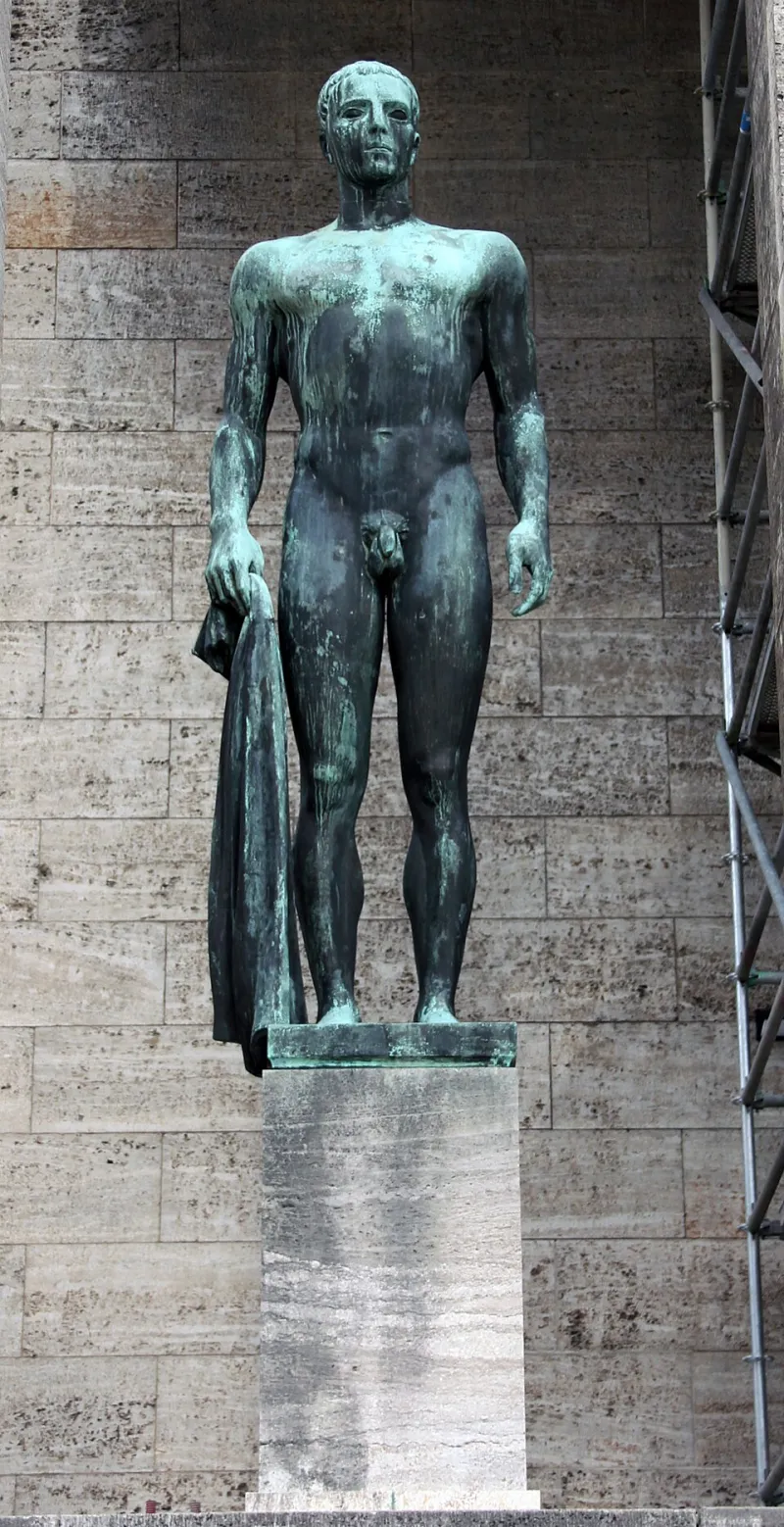
Photo: OTFW, Berlin, CC BY-SA 3.0, via Wikimedia Commons
Imagine you could pull a trained athlete from ancient Olympia — someone who had spent years preparing for the ancient pentathlon, honing their ability across five disciplines — and drop them into a modern Olympic decathlon. Not to win. Just to compete.
How would they do?
It's a thought experiment, obviously. But it's one that sports historians, biomechanics researchers, and classicists have approached with surprising seriousness — because the answer reveals something important about two fundamentally different visions of what athletic excellence is actually supposed to look like.
The Greek Ideal: Complete, Not Specialized
The ancient Greeks had a word — kalokagathia — that roughly translates to the unity of physical beauty and moral virtue. It was their highest athletic compliment, and it was explicitly tied to all-around physical development rather than narrow specialization.
The ancient pentathlon — running, long jump, discus, javelin, and wrestling — was considered the most prestigious test of an athlete's worth precisely because it demanded breadth. Winning a single event was impressive. Excelling across five was the mark of a truly superior human being.
Greek athletic training reflected this philosophy. Athletes didn't train exclusively as runners or throwers. They worked across disciplines, developing what modern coaches would recognize as general physical preparedness: balanced strength, aerobic capacity, coordination, and explosive power. The training grounds at Olympia and Athens were multipurpose facilities where the same athlete might practice sprinting in the morning and wrestling in the afternoon.
This was, in a very real sense, the ancient world's version of CrossFit — and the ancient Greeks would probably be insufferable about it.
What We Actually Know About Ancient Performance
Estimating ancient athletic performance is tricky, but not impossible. Historians and sports scientists have reconstructed some data points from ancient records, stadium dimensions, and skeletal analysis of athletes' remains.
The ancient stadion race — roughly 192 meters — was likely run at speeds equivalent to somewhere between 22 and 24 kilometers per hour for elite competitors. That's respectable but well below the speeds modern 200-meter sprinters sustain. Usain Bolt peaked at approximately 44.72 km/h during his world record 100-meter run. The gap is enormous.
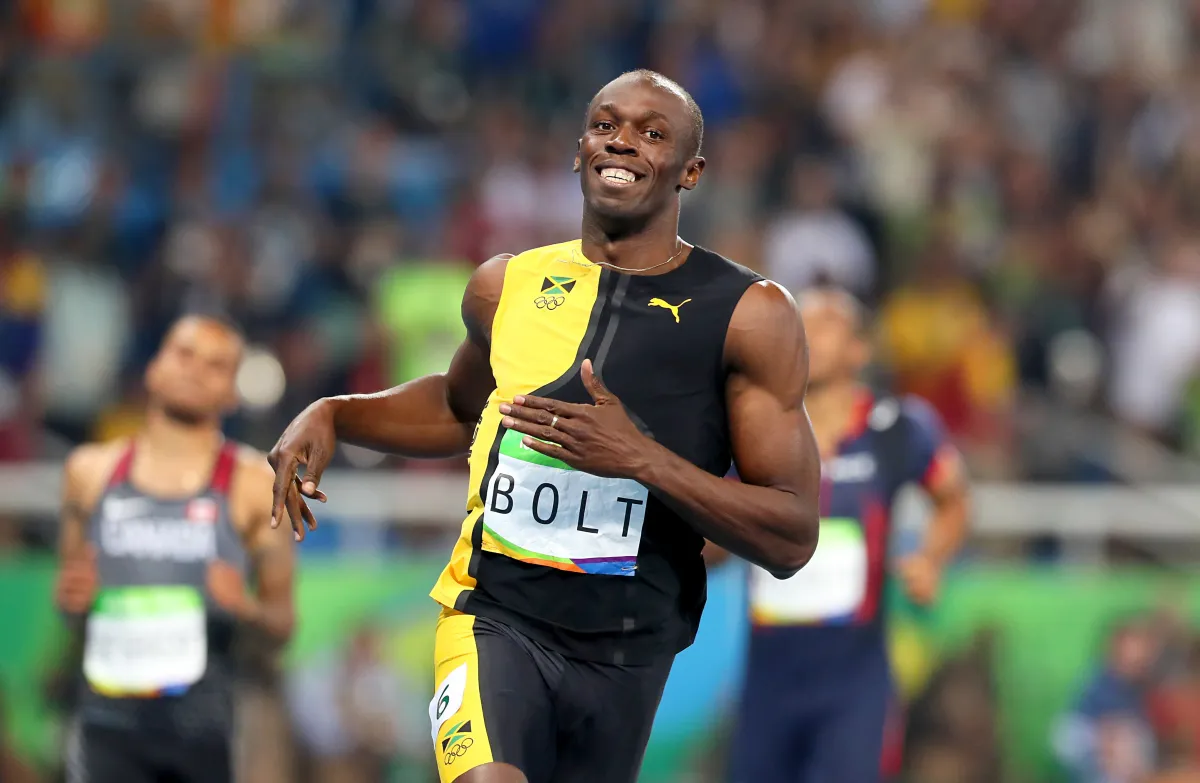 Photo: Usain Bolt, via static.independent.co.uk
For throwing events, the picture is more complicated. Ancient discus throws are harder to calculate because the implements varied in size and weight, and throwing technique differed significantly from the modern rotational style. Some estimates suggest ancient elite throwers were reaching distances in the 90-to-100-foot range — competitive with decent modern collegiate athletes, but well short of Olympic-level performance today.
Long jump estimates, based partly on the Chionis of Sparta legend (who reportedly jumped over 23 feet in ancient competition), are intriguing — though historians treat these numbers with appropriate skepticism. Modern Olympic long jumpers regularly exceed 27 feet, with the world record sitting at 29 feet, 4.5 inches.
The pattern that emerges is consistent: ancient athletes were genuinely capable, physically impressive by any reasonable standard, and would likely compete respectably in many amateur or collegiate contexts. At the Olympic level? They'd struggle.
Where the Ancient Athlete Would Actually Thrive
Here's where the thought experiment gets interesting.
The modern decathlon rewards exactly the profile that ancient Greek training produced: an athlete who is fast but not world-class fast, strong but not world-class strong, coordinated across multiple movement patterns, and mentally resilient enough to compete across ten events over two days.
The decathlon scoring system is specifically designed to value breadth over peak specialization. A competitor who runs a 10.5-second 100 meters, throws the shot put 50 feet, and clears 6 feet, 6 inches in the high jump will outscore a pure sprinter who runs 9.9 seconds and does nothing else well. The event is structurally biased toward the all-around athlete — which is precisely what ancient Greek training produced.
Ashton Eaton, the American who won back-to-back Olympic decathlon gold medals in 2012 and 2016 and set the world record, is frequently described by coaches as the closest thing to a complete athlete in modern track and field. His training philosophy — broad physical development, no single discipline allowed to dominate — would have been entirely legible to a Greek athletic trainer from 500 BC.
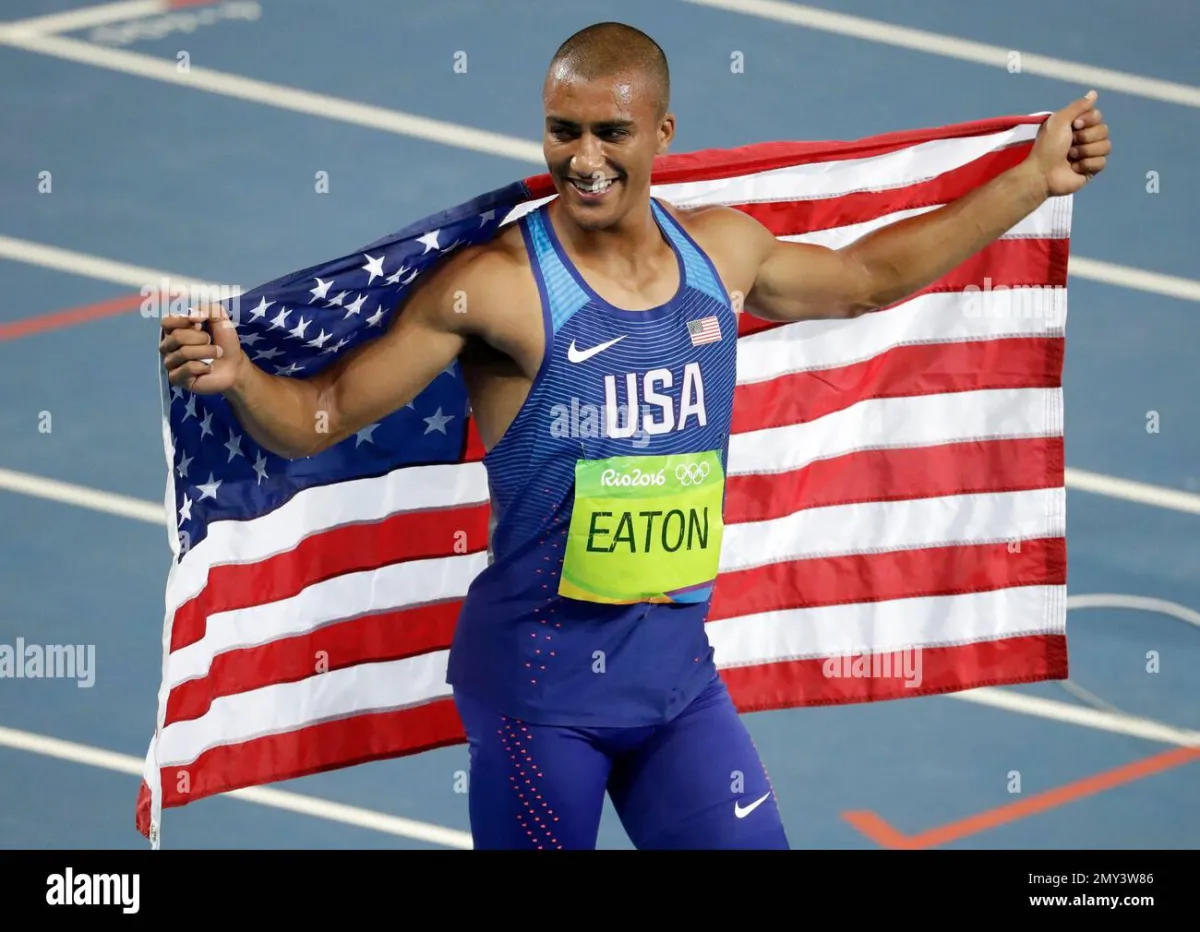 Photo: Ashton Eaton, via c8.alamy.com
That's not a coincidence. The decathlon was invented in the early 20th century partly as a response to the perceived over-specialization of modern athletics. Its designers were, consciously or not, reaching back toward the Greek ideal.
Where Ancient Athletes Would Fall Apart
Outside the multi-discipline events, the picture reverses sharply.
Modern sprint training is a precise science. Today's 100-meter specialists train their fast-twitch muscle fiber recruitment, their reaction times, their block mechanics, and their race-phase transitions with a granularity that would have been incomprehensible to ancient coaches. The result is performances that exist in a different physical universe from anything the ancient world produced.
The same applies to pure strength events. Modern shot-putters and hammer throwers follow periodized strength programs, use creatine supplementation, and are coached with motion-capture technology that analyzes their technique frame by frame. The rotational throwing technique used in modern discus — radically different from the ancient standing throw — alone accounts for massive distance gains.
In swimming, cycling, and any event where equipment and surface technology play a role, ancient athletes wouldn't just lose. They'd be disqualified for being too slow to finish before the venue closed.
Two Ideals, One Question
The deeper question this thought experiment raises isn't really about ancient versus modern performance. It's about what athletic excellence is actually for.
The Greeks trained complete human beings because they believed physical virtue was inseparable from civic virtue. An athlete who could only sprint was a specialist, not a whole person. The modern Olympic program, by contrast, celebrates the extreme endpoint of human specialization — the person who has sacrificed everything else to become the fastest or strongest in one narrow domain.
Both visions have produced extraordinary athletes. Both have produced extraordinary moments.
But when you watch a decathlon unfold over two grueling days — watching a single competitor sprint, jump, vault, and throw their way through ten different tests — you're watching something that would have made perfect sense to an athlete training in the shadow of Zeus's temple in ancient Olympia.
The ancient Greeks didn't invent the decathlon. But they absolutely would have understood it. And that might tell us more about what sports are really measuring than any world record ever could.