Built Different: How the World's Genetic Variety Quietly Became the Greatest Force in Athletic History
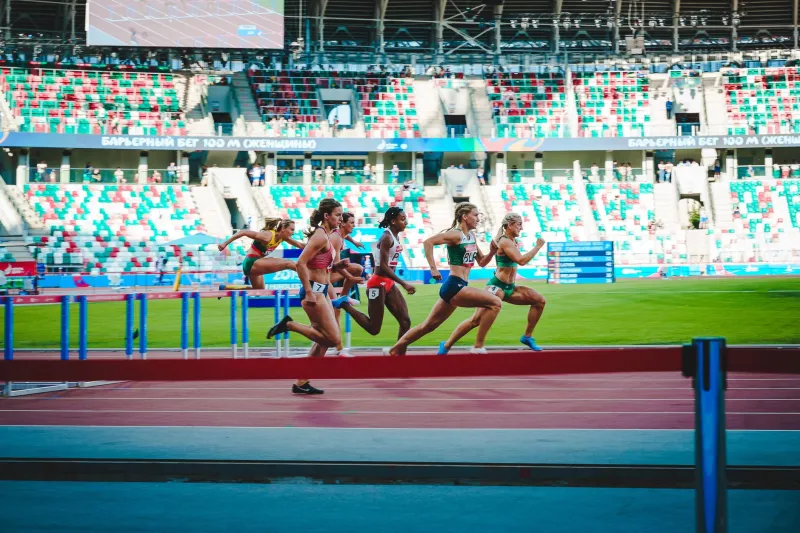
In 1968, Jim Hines became the first man to officially break the 10-second barrier in the 100 meters, running 9.95 at the Mexico City Olympics. It was a watershed moment—proof that human speed had a new frontier. What almost nobody said out loud at the time was that Hines was also part of a broader demographic shift already reshaping the sport, one that would accelerate dramatically over the following decades and eventually rewrite what fast, strong, and powerful meant in athletic terms.
The story of athletic records is usually told as a story about training, technology, and nutrition. Those things matter enormously. But underneath all of them runs a quieter, more fundamental current: the gradual expansion of who gets to compete. And with that expansion came something nobody planned for—an extraordinary, continent-spanning experiment in what different human bodies are capable of.
The Narrow World of Early Olympic Sport
The ancient Olympics were, by design, an exclusive event. Only free Greek men could compete. Women were barred. Non-Greeks—barbaroi, or barbarians—were not invited. The competitive pool was geographically, ethnically, and socially constrained in ways that reflected the Greek world's assumptions about who mattered.
The modern Olympics, revived in Athens in 1896, weren't much broader in practice. Of the 241 athletes who competed, virtually all were European or American, almost all were white, and nearly all came from the upper or middle classes who could afford to travel and train. The records set at those early Games—and for decades afterward—reflected the physical capabilities of a remarkably small slice of global humanity.
This wasn't a conspiracy. It was an infrastructure problem compounded by political and social exclusion. Most of the world's population simply had no pathway to elite international competition. No coaching pipelines. No national federations. No funding. No invitation.
When the Doors Opened
The gradual decolonization of the mid-20th century, combined with the IOC's expansion of Olympic eligibility and the growth of international governing bodies for individual sports, began changing the composition of the competitive pool in ways that would have staggering consequences for the record books.
The 1960 Rome Olympics offered an early glimpse of what was coming. Abebe Bikila, an Ethiopian soldier who ran the marathon barefoot through the streets of Rome, not only won gold but set a world record. He repeated the feat four years later in Tokyo, this time in shoes. Bikila wasn't just a remarkable individual athlete—he was the opening signal of a generational shift in distance running.
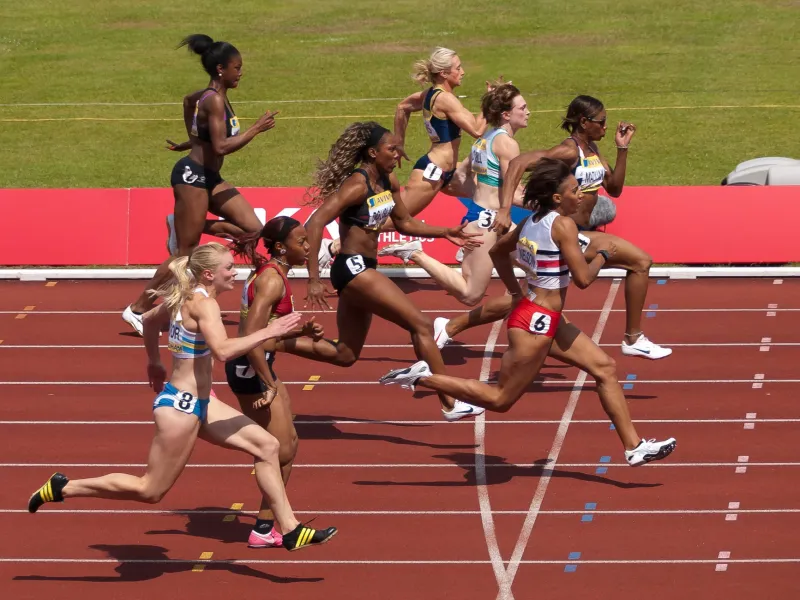
Over the following decades, athletes from East Africa—particularly Kenya and Ethiopia—came to dominate middle and long-distance running at a level that has never been seriously challenged. The statistics are almost absurd. Of the top 50 fastest marathon times ever recorded, the overwhelming majority belong to runners from Kenya or Ethiopia. In the 10,000 meters, East African athletes have held the world record almost continuously since the 1990s.
The Science Behind the Shift
Researchers have spent considerable energy trying to understand why. The answers are multilayered, and it's important to be careful here—genetics is a complex field, and the history of attributing athletic performance to race is littered with oversimplification and worse. But there are documented physiological and environmental factors worth examining honestly.
Athletes from the Kalenjin ethnic group in Kenya's Rift Valley, for instance, tend to have a distinctive body composition—long, slender limbs with relatively low calf mass—that biomechanists have linked to exceptional running economy. Less mass at the extremities means less energy spent moving the legs through each stride cycle. Growing up at high altitude (the Rift Valley sits between 6,000 and 9,000 feet above sea level) naturally develops a cardiovascular system adapted to oxygen-efficient performance. Running long distances to school from childhood builds aerobic capacity before formal training ever begins.
None of these factors is purely genetic. They're the product of genetics interacting with environment, culture, and circumstance over generations. That interaction—what scientists call gene-environment interplay—is precisely what makes the story interesting and resistant to simple explanations.
Similar dynamics appear in other sports. West African ancestry has been linked, in some research, to a higher proportion of fast-twitch muscle fibers—the kind that generate explosive power—which may partially explain the dominance of sprinters with West African heritage at the elite level. Polynesian athletes have produced a disproportionate number of elite rugby players and American football linemen, a pattern researchers have linked to body composition traits common across those populations.
What Globalization Revealed That Science Couldn't Predict
Here's the thing that gets lost in the genetics conversation: most of these patterns only became visible after athletes from these regions gained access to competitive pathways. The physical traits were always there. The records weren't, because the athletes weren't in the race.
This is the part of the story that matters most for understanding athletic progress. When we look at a record book from 1930 and compare it to one from 2024, we're not just seeing the effects of better training and nutrition. We're seeing what happens when the competitive pool expands from a few dozen countries to nearly 200—when billions of people who were previously excluded from elite sport are gradually, imperfectly, and incompletely brought into the conversation.
The records that have fallen most dramatically over the past 60 years are often in precisely the events where previously underrepresented populations have entered in large numbers. That's not a coincidence. It's a mathematical inevitability. More people competing means a higher probability of finding the outliers—the individuals at the extreme end of any given physical distribution—who can push the boundaries of what's possible.
What This Means for the Future
If the expansion of global participation is partly responsible for the record-breaking era we've lived through, then the future of athletic performance depends significantly on who still isn't in the room. There are populations across South Asia, Southeast Asia, and parts of Africa that remain underrepresented in international athletics relative to their population size. Each new generation of athletes who gains access to competitive sport brings with it a fresh genetic lottery—and the possibility that somewhere in that pool is the next Bikila, the next Bolt, the next person who makes everyone revise their assumptions about what the human body can do.
The ancient Greeks believed athletic excellence was a divine gift, distributed by the gods to worthy men of the right lineage. They weren't entirely wrong about the genetic component. But they were spectacularly wrong about which lineages the gifts were distributed to.
The world has been proving that ever since.