The Oldest Sport on Earth Almost Got Cut From the Olympics. Here's What That Says About Us.
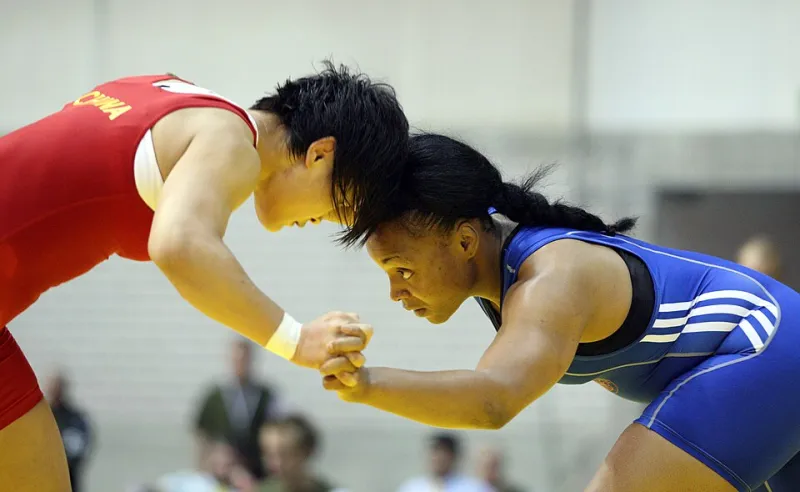
Photo: U.S. Army, CC BY 2.0, via Wikimedia Commons
The Oldest Sport on Earth Almost Got Cut From the Olympics. Here's What That Says About Us.
In February 2013, the International Olympic Committee did something that shocked the sports world and baffled historians: it voted to recommend removing wrestling from the Olympic program. Not a fringe modern sport invented in the last decade. Not a niche competition struggling to find participants. Wrestling — the sport depicted on ancient Greek pottery, practiced by soldiers and philosophers alike, featured at the very first recorded Olympic Games in 776 BC.
The proposal was eventually reversed after an intense global campaign, and wrestling returned to the Olympic roster. But the fact that it came that close to elimination says something important — not just about modern sports politics, but about the tension between athletic heritage and entertainment economics that defines our era.
Where It All Began
You don't have to squint very hard at ancient history to find wrestling at the center of it. Egyptian tomb paintings dating back to around 2000 BC show wrestlers in recognizable holds and positions. Ancient Mesopotamian artifacts depict the sport. But it was in Greece where wrestling became something more than physical contest — it became culture.
The Greeks called it pale, and they considered it among the most demanding and noble of athletic pursuits. It required not just strength but strategy, patience, and the ability to read an opponent's body before they moved. Wrestlers competed at the ancient Olympics as early as 708 BC, and the sport was a centerpiece of the pentathlon — the five-event competition that the Greeks considered the ultimate test of the complete athlete.
Mythology wove itself around the sport too. Theseus, the legendary founder of Athens, was said to have invented a refined form of wrestling technique. Hercules himself was depicted as a wrestler in Greek art and legend. This wasn't a peripheral activity — it was bound up with ideas about heroism, masculinity, and the ideal of the warrior-athlete.
When Milo of Croton won six consecutive Olympic wrestling titles between 540 and 516 BC, he became the most celebrated athlete in the ancient world. His fame spread across the Greek-speaking Mediterranean in a way that resembles how we talk about Michael Jordan or Muhammad Ali today — a figure so dominant that the sport itself became partly defined by his presence.
The Long Road to the Modern Olympics
When Pierre de Coubertin and his colleagues revived the Olympic Games in Athens in 1896, wrestling was a natural inclusion. It appeared on the program in Greco-Roman style, a form of the sport that prohibited holds below the waist and emphasized upper-body technique. Freestyle wrestling — which allows leg attacks and takedowns — joined the Olympics in 1904 at the St. Louis Games.
For the better part of a century, wrestling was a quiet but reliable fixture of the Olympic program. It didn't generate the television ratings of track and field or the glamour of gymnastics, but it had deep roots in dozens of countries across Eastern Europe, the Middle East, Central Asia, and the Americas. Nations that rarely won Olympic medals in other sports found their identity in wrestling. Iran, Cuba, Azerbaijan, Georgia — wrestling was their stage, their source of national pride, their connection to the Games.
In the United States, collegiate wrestling developed its own passionate culture. Programs at schools across the Midwest and Northeast produced generations of Olympic competitors, and the sport carried a working-class, gritty reputation that felt authentic in a way that more polished Olympic events sometimes didn't.
But something was shifting beneath the surface.
Television Changed the Equation
The modern Olympic Games are, among other things, an enormous television and sponsorship operation. The IOC depends on broadcast rights deals worth billions of dollars, and those deals are negotiated based on viewership. Sports that generate big ratings get protected. Sports that struggle to find casual audiences become vulnerable.
Wrestling, for all its ancient pedigree, is not an easy sport to televise compellingly. The rules are complex, the action can be slow, and the scoring system has changed multiple times over the decades in attempts to make matches more exciting for casual viewers. Unlike gymnastics, where a single dramatic routine can capture a non-fan's attention, or swimming, where the finish-line drama is universally legible, wrestling requires a certain baseline of knowledge to fully appreciate.
When the IOC's executive board recommended dropping wrestling from the 2020 Olympics in February 2013, the stated reasoning centered on the sport's need to modernize and grow its global audience. Critics were blunter: wrestling wasn't generating the sponsor-friendly television moments that the Olympic machine needed.
The wrestling community's response was fierce and organized. Athletes, coaches, national federations, and fans from across the globe — from tiny Central Asian republics to American college towns — mounted a coordinated campaign to save the sport. They highlighted its ancient origins, its global participation numbers, its place in Olympic history. They pointed out that cutting wrestling while retaining sports with far smaller global footprints made no logical sense.
In September 2013, the IOC reversed course. Wrestling was reinstated for the 2020 Tokyo Olympics and beyond, though the sport agreed to implement rule changes designed to make competition more exciting and television-friendly.
It had survived. But only barely, and only by agreeing to change.
What We Lose When We Forget
The wrestling story is really a story about what happens when the economics of modern sport collide with the weight of athletic history. Ancient Greek athletes didn't compete for television ratings or sponsorship activations. They competed because the contest itself was meaningful — because testing the limits of human strength and skill in front of witnesses was considered an act of cultural and even religious significance.
The modern Olympics were built on the idea that this tradition was worth preserving and celebrating. But somewhere along the way, the machinery required to sustain a global sporting spectacle began to apply its own logic — ratings, revenue, reach — to decisions about which pieces of that tradition deserved to survive.
Wrestling's near-elimination is a warning. It suggests that no sport, no matter how ancient or how deeply embedded in the DNA of athletic competition, is automatically safe in a world where entertainment value is the primary currency.
What we decide to preserve tells us who we are. The ancient Greeks preserved wrestling because they believed it revealed something essential about the human character — the capacity to struggle, adapt, and endure.
We almost cut it because it didn't move the ratings needle.
That gap between those two positions is worth sitting with for a while.