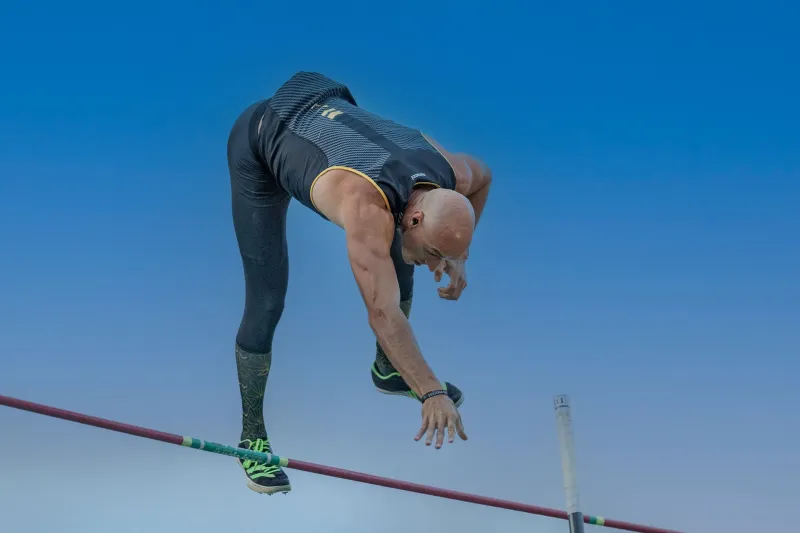
Gut Feeling and Glory: How America's First Track Coaches Accidentally Invented Modern Sports Science
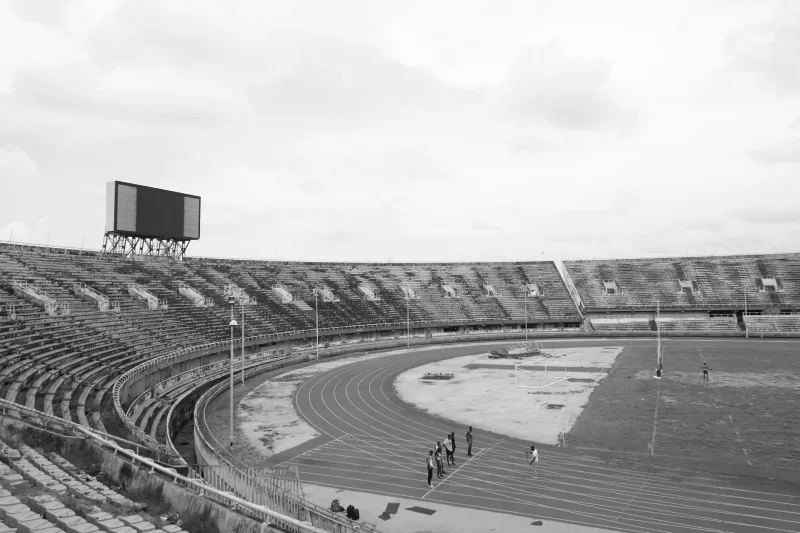
Gut Feeling and Glory: How America's First Track Coaches Accidentally Invented Modern Sports Science
Somewhere in the late 1880s, a coach at a small northeastern college stood on a cinder track watching his sprinters run themselves into the ground and made a decision that would have seemed almost radical at the time: he told them to stop.
Not forever. Just for a day. Maybe two.
He had no peer-reviewed research to back him up. No wearable technology measuring cortisol levels or muscle fiber fatigue. He just had a hunch that a body pushed to its limit needed time to come back stronger. He was right. And the fact that he was right — that so many of those early American track coaches were right — is one of the most quietly fascinating stories in the history of sport.
The Frontier Days of American Track
When organized track and field began taking root in the United States in the 1870s and 1880s, there was essentially no playbook. The sport had drifted over from Britain, where gentlemen athletes ran in wool and leather for the sheer sporting pleasure of it. American colleges picked it up fast, but the idea of systematic training was still a foreign concept.
Early coaches — many of whom were former athletes themselves, or simply enthusiastic faculty members who'd volunteered for the role — were operating in a near-total information vacuum. Physiology as a discipline barely existed in any applied sense. The word "interval training" hadn't been coined. Nobody had mapped the aerobic energy system. The concept of periodization, the structured cycling of training loads across a season, was decades away from being formally articulated.
What these coaches had instead was eyes. And experience. And a willingness to tinker.
At Yale, Harvard, and the early athletic clubs of New York and Boston, coaches began keeping notebooks. They tracked which athletes improved and which ones burned out. They noticed that runners who trained at full effort every single day tended to peak early and fade. They noticed that athletes who alternated hard days with easier ones seemed to arrive at competition feeling sharper. They didn't have the language for what they were observing, but they were watching the body's adaptation cycle in real time.
Accidentally Getting It Right
Take the concept of rest as a training tool. Today, sports scientists call it "supercompensation" — the physiological process by which muscle tissue, stressed and then allowed to recover, rebuilds slightly stronger than before. It's a cornerstone of modern athletic periodization. Any college strength coach can explain the mechanism in detail.
But coaches in the 1890s were prescribing rest days based on nothing more than observation and common sense. They noticed that athletes who rested before major competitions ran better. They didn't know why — they just knew it worked.
Similarly, early American distance coaches began experimenting with what we'd now recognize as tempo runs — sustained efforts at a pace slightly below maximum, designed to build aerobic capacity without destroying the body. They called it "steady work" or "road work" and argued about it endlessly in the athletic press of the era. Some coaches swore by long, slow miles. Others demanded shorter, faster repetitions. The debate sounds remarkably like the ones happening in running forums today.
Michael Murphy, one of the most influential track coaches of the late 19th century who worked with Yale and later the U.S. Olympic team, was famous for his obsessive attention to individual athletes. He adjusted training loads based on how each runner looked and felt on a given day — a personalized approach that modern sports scientists would recognize immediately as load management. Murphy couldn't quantify what he was doing. He was running on instinct refined by years of watching humans run.
 Photo: Michael Murphy, via es.web.img3.acsta.net
The Science Catches Up
It wasn't until the mid-20th century that exercise physiology began to formally validate what those early coaches had stumbled onto. Researchers like Roger Bannister — himself a runner, famously — started applying scientific rigor to training theory. Interval training was codified by Swedish coach Gösta Holmér and later popularized by Emil Zátopek's almost mythological workout regimens in the 1950s.
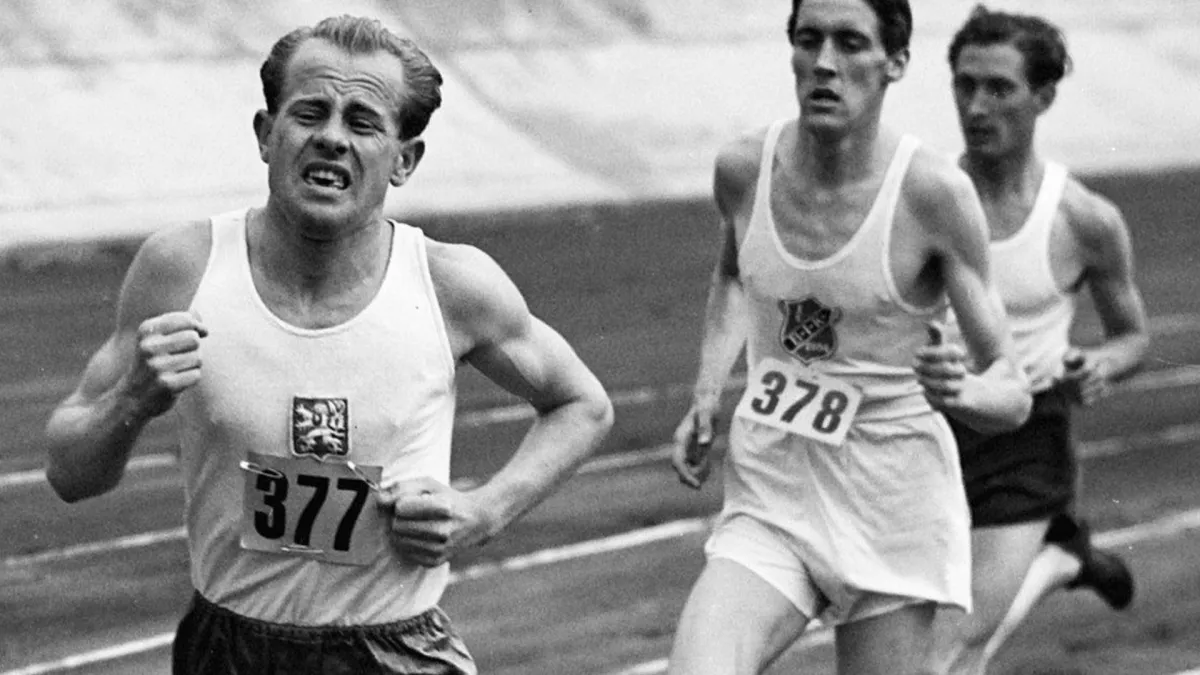 Photo: Emil Zátopek, via hpx-cdn.xsd.cz
But here's the thing: when the science arrived, it largely confirmed what the old coaches had been doing by feel. Rest matters. Variation in training intensity matters. Individualization matters. The aerobic base those early American coaches were building with their "road work" was exactly what the physiology textbooks would later prescribe.
Modern training is, in many ways, the same architecture with better blueprints. Today's elite American track athletes train with GPS-tracked workouts, continuous heart rate monitoring, blood lactate testing, and sleep analysis. Their coaches receive data reports that would have looked like science fiction to Murphy. And yet the fundamental structure — hard days, easy days, buildup phases, taper periods — would be recognizable to any coach who was chalking up a cinder track in 1895.
Genius, Luck, or Something In Between?
The honest answer is probably all three, weighted differently depending on the coach.
Some of those early American track coaches were genuinely brilliant observers of human performance. They were working with a limited toolkit but applying it with real intelligence. Others got lucky — they happened to land on methods that worked without fully understanding why, and their athletes' results gave those methods an undeserved air of authority.
But there's a third category worth considering: coaches who understood something about human beings that no lab instrument has ever fully captured. The athlete who's undertrained but confident will often outperform the athlete who's perfectly optimized but anxious. The runner who believes in his coach's methods runs differently than one who doesn't. Those early coaches were working in the space where physiology meets psychology, and they often got the psychology right even when they couldn't explain the physiology.
What the Old Coaches Left Behind
The legacy of those instinct-driven pioneers isn't just a historical curiosity. It's a reminder that human performance has always been, at its core, a human problem. Data helps. Technology helps enormously. But the first question a great coach asks — "What does this particular athlete need today?" — hasn't changed since a guy on a cinder track in New Haven decided his runners needed a day off.
From ancient Olympia, where Greek trainers developed their own empirical methods over centuries of competition, to the data-saturated training centers of modern American athletics, the thread is the same: someone watching closely, adjusting constantly, and trying to get a human being to the finish line faster than anyone thought possible.
The finish line keeps moving. The approach — pay attention, adapt, repeat — never really does.