The Thin Air Secret: How Where You Train Has Quietly Become as Important as How You Train
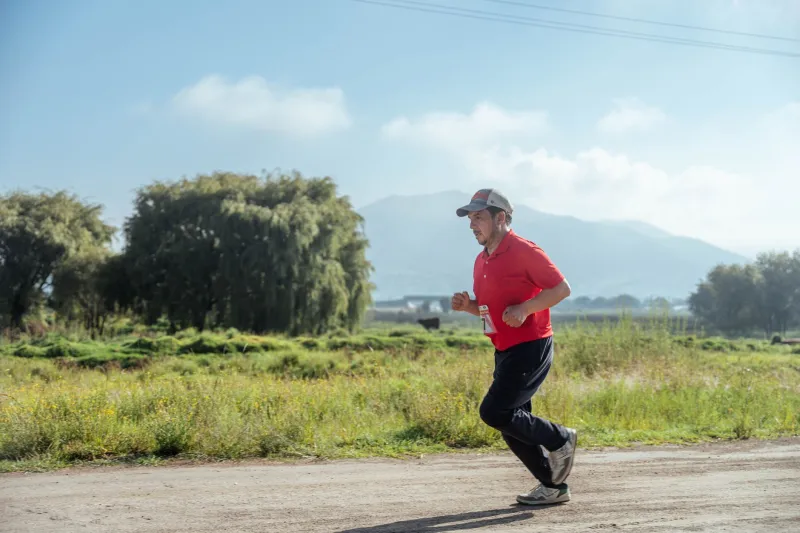
If you wanted to build the perfect distance runner from scratch, you might start by placing them at 7,000 feet above sea level as a child, having them run several miles to school and back every day, and letting their cardiovascular system quietly adapt over years to an environment where every breath delivers less oxygen than it would at sea level. You wouldn't call this a training program. You'd call it growing up in Iten, Kenya.
Altitude training is one of the most significant performance advantages in modern sport — and one of the least discussed in mainstream American sports coverage. It's invisible, it's geographic, and it has reshaped global competition in ways that have almost nothing to do with natural talent or technological innovation.
Before the Science, There Was Mexico City
The 1968 Summer Olympics in Mexico City changed everything, though nobody fully understood it at the time. The city sits at roughly 7,350 feet above sea level, and the results of competing there were strange and contradictory. Endurance events — the marathon, the 5,000 meters, the 10,000 meters — produced slower times than expected, as athletes from low-altitude countries struggled visibly with the thin air. But short, explosive events told a completely different story.
Bob Beamon leaped 29 feet, 2.5 inches in the long jump — a mark so far beyond anything previously recorded that officials initially had to bring in a different measuring device to confirm it. Jim Hines became the first man to officially break the 10-second barrier in the 100 meters. Sprinters and jumpers thrived in the reduced air resistance at altitude. Distance runners from sea-level nations suffered.
What Mexico City made visible, for the first time at Olympic scale, was that elevation wasn't just a backdrop. It was a variable — one that could be manipulated, exploited, and eventually engineered.
The Science Underneath the Advantage
The mechanism is straightforward once you understand it. At high altitude, the partial pressure of oxygen in the air drops. Your body, sensing reduced oxygen availability, responds by producing more erythropoietin — EPO, the same substance that became notorious in cycling doping scandals — which stimulates the production of red blood cells. More red blood cells means greater oxygen-carrying capacity. When that athlete then competes at sea level, where oxygen is plentiful, they're running with a cardiovascular system that has been quietly upgraded by the altitude itself.
This is why athletes who grew up at elevation don't just perform well in thin air — they perform exceptionally well everywhere. Their bodies have been conditioned over years or decades to extract maximum value from every breath. When they descend to sea level, they're operating with an advantage that no amount of sea-level training can fully replicate.
For Kenyan runners in the Rift Valley, for Ethiopian athletes in Addis Ababa and the surrounding highlands, this isn't a training strategy. It's simply where they live.
Buying What Others Inherited
Once sports scientists confirmed the mechanism in the 1970s and 1980s, the logical response from wealthier athletic programs was to try to replicate it. The US Olympic Training Center opened a facility in Colorado Springs — elevation 6,035 feet — partly for this reason. American distance runners began spending significant portions of their training cycles at altitude, rotating between high-altitude camps and sea-level competition.
Europe followed. Japanese distance programs built altitude training blocks into their annual calendars. The Flagstaff, Arizona area, sitting at around 7,000 feet, became a magnet for elite American runners seeking what Kenyan athletes had grown up with. Today, a significant percentage of the world's top distance runners spend part of each year at altitude, often at camps in Kenya itself — the irony being that athletes from wealthy nations are traveling to developing-world locations specifically to access a geographic resource.
But there's a limit to how far you can close this gap by visiting. Growing up at altitude produces physiological adaptations that are deeper and more durable than those acquired through a few months of training camps. The athletes who benefit most are still those who spent their formative years in the thin air — and those athletes continue to come disproportionately from East Africa.
The Geographic Lottery Nobody Asked to Enter
This raises an uncomfortable question that sports rarely confronts directly: how much of elite athletic performance is the result of factors that have nothing to do with individual effort, talent, or even training quality?
The altitude advantage is a geographic lottery. Kenyan and Ethiopian runners didn't choose to be born at elevation any more than a sprinter from a sea-level Caribbean nation chose flat terrain. The advantage is real, measurable, and significant — and it was distributed entirely by accident of birth.
American sports culture, steeped in narratives of individual effort and meritocracy, finds this kind of structural advantage difficult to sit with. We prefer stories about hard work and dedication. But the data on East African distance dominance — Kenyan men have won the Boston Marathon 24 times since 1988 — suggests that geography is doing a significant portion of the heavy lifting.
Did the Ancients Know Any of This?
There's no evidence that ancient Greek athletes had any systematic understanding of altitude as a performance variable. The ancient Olympics were held at Olympia, which sits at a relatively modest elevation — not high enough to produce meaningful physiological effects. Greek athletic culture was obsessed with training methodology, diet, and preparation, but altitude as a tool simply wasn't part of the conceptual framework.
What the ancient Greeks did understand, intuitively, was that where an athlete came from mattered. City-states with particular geographic and climatic conditions produced particular kinds of athletes. The idea that environment shapes performance is ancient. The scientific mechanism behind it is modern.
The Invisible Playing Field
As sports science continues to advance, the altitude advantage is becoming more sophisticated rather than less. Altitude tents — sealed sleeping environments that simulate high-altitude conditions — have allowed athletes to gain some of the red blood cell benefits without leaving their homes. They're legal, they're increasingly common among elite runners, and they represent the logical endpoint of a decades-long effort to commodify what Kenyan and Ethiopian runners were born into.
The playing field, in other words, is still tilted — just in more complex and expensive ways. Geography remains sport's most powerful invisible drug. And unlike EPO, nobody has figured out how to ban being born at 7,000 feet.