How the World Showed Up and Took the Track: The Slow Collapse of America's Olympic Iron Grip

Photo: Habst, CC BY-SA 4.0, via Wikimedia Commons
How the World Showed Up and Took the Track: The Slow Collapse of America's Olympic Iron Grip
For the first half of the 20th century, American athletes treated Olympic track and field like a personal trophy case. Sprint medals, distance titles, field event podiums — the Stars and Stripes draped over them with a regularity that started to feel inevitable. Then, one nation at a time, the world figured out the formula. And nothing in international athletics was ever quite the same.
The story of how America lost its stranglehold on Olympic track isn't really a story about decline. It's a story about what happens when sport becomes truly global — and what that transformation reveals about power, politics, and human potential.
When America Owned the Track
Cast your mind back to the early modern Olympics. At the 1900 Paris Games, American athletes swept so many track and field events that European observers were left genuinely bewildered. By the 1904 St. Louis Games — held on American soil, with limited international participation — the U.S. dominance was almost farcical. Through the 1920s and into the post-war era, American sprinters, jumpers, and throwers arrived at each Games as the presumptive favorites across the board.
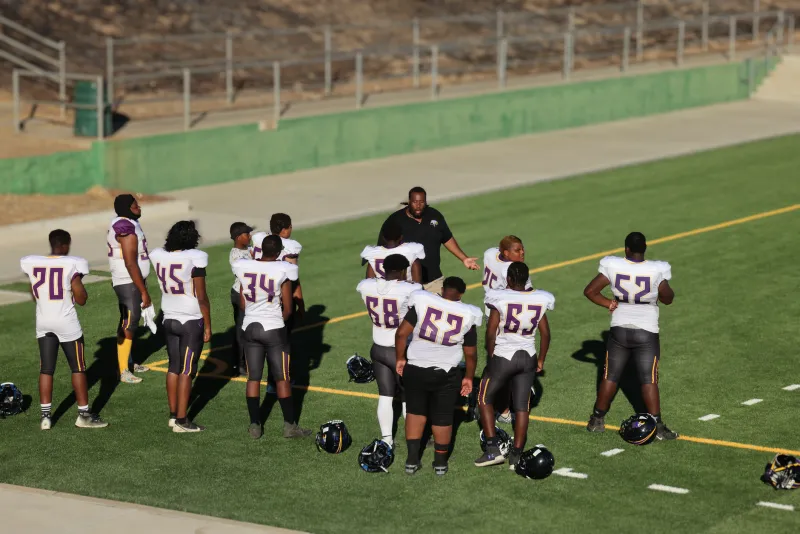
The reasons were structural as much as athletic. American universities had built competitive track programs that functioned as de facto national academies. The NCAA system created a pipeline that continuously produced elite-level talent. Coaching knowledge, training facilities, and competitive depth were concentrated in the United States in ways that simply didn't exist in most of the world. Other nations weren't losing because their athletes were inferior. They were losing because the infrastructure to develop those athletes didn't yet exist.
That was about to change.
Kenya's Quiet Revolution
If you had told an American sports fan in 1950 that East African runners would one day dominate middle and long-distance running so completely that their absence from a podium would constitute a surprise, they would have looked at you sideways. Kenya didn't even field an Olympic track team until 1956. By 1968, Kip Keino had beaten Jim Ryun — the great American miler — in the 1500 meters at altitude in Mexico City, and the tectonic plates of distance running had shifted permanently.
What happened in Kenya wasn't magic. It was the intersection of geography, culture, and institutional investment. High-altitude training in the Rift Valley naturally developed cardiovascular capacity that lowland athletes had to simulate artificially. Running culture was woven into daily life — children ran to school, communities ran together, distance was not a burden but a habit. When organized coaching and international competition were added to that foundation, the results were extraordinary.
The Kenyan model also carried a geopolitical dimension. During the Cold War, newly independent African nations understood that Olympic success was a form of soft power. Athletic excellence announced nationhood to the world in a way that diplomatic communiqués never could. Sport was visibility. Visibility was legitimacy. That understanding drove investment and ambition in ways that pure athletic tradition alone might not have.
Jamaica's Sprint Factory
While Kenya was rewriting the rules of distance running, a small Caribbean island was quietly building the most concentrated sprinting culture the world had ever seen. Jamaica's dominance of the 100 and 200 meters — crystallized in Usain Bolt's jaw-dropping performances at the 2008 and 2012 Olympics — didn't materialize from nowhere. It was the product of decades of grassroots competition, most visibly embodied in the Inter-Secondary Schools Boys and Girls Championships, known locally as "Champs."
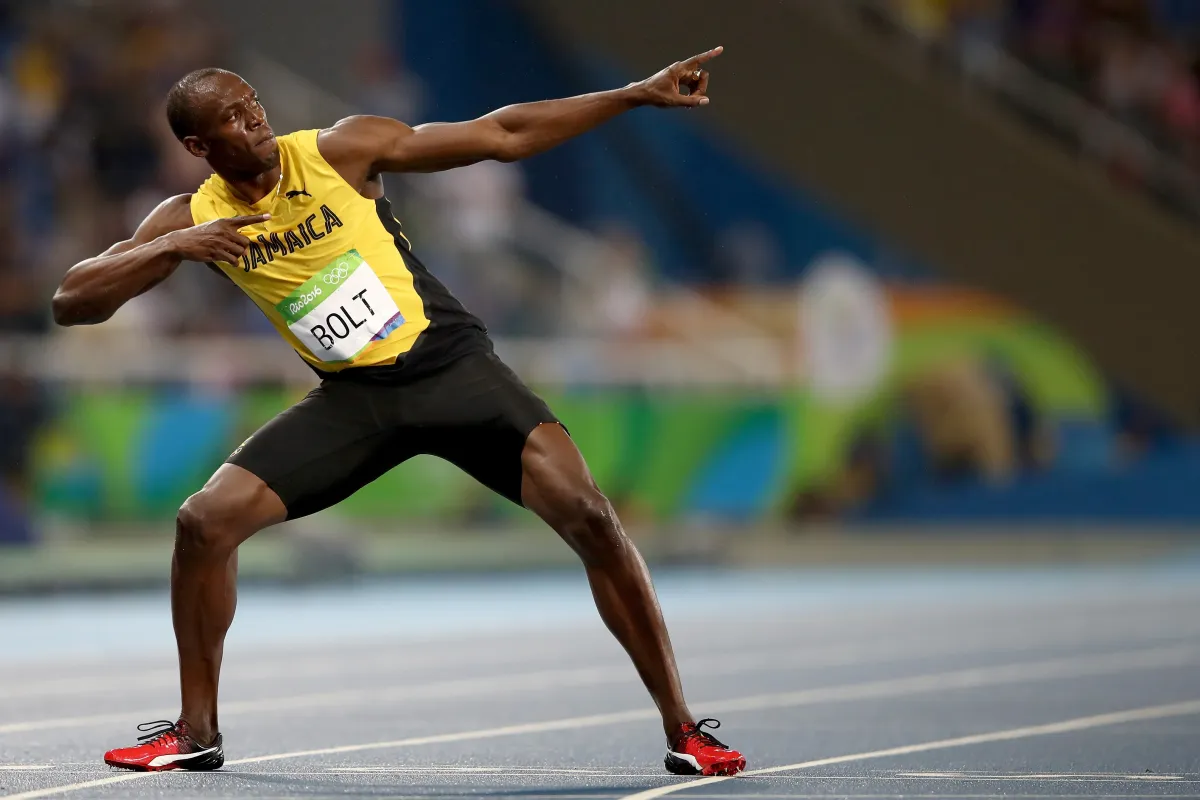 Photo: Usain Bolt, via images.immediate.co.uk
Held annually since 1910, Champs is a national high school track meet that draws tens of thousands of spectators and is broadcast on television. It is, by any measure, the most intense developmental sprint competition on the planet. Athletes who perform at Champs are celebrated as national heroes before they're old enough to vote. The competitive pressure, the crowd intensity, and the cultural weight of the event forges sprinters in a way that no American club system has fully replicated.
When Bolt ran 9.69 seconds in Beijing and then 9.58 seconds in Berlin — a world record that still stands — he wasn't just breaking a personal barrier. He was the loudest expression of a system that had been producing elite sprinters for generations. American sprinters had once been the automatic gold medal favorites. Now they were chasing Jamaicans.
The Infrastructure Arms Race
Kenya and Jamaica are the most dramatic examples, but the broader pattern repeated itself across the globe. Ethiopia built on Kenya's model to produce its own distance running dynasty. China invested state resources into systematic athletic development programs that transformed it into a multi-discipline Olympic force. European nations that had long competed with American athletes in field events — Germany, Russia, the Eastern Bloc countries — developed state-sponsored systems that, whatever their ethical complications, produced measurable athletic results.
The common thread was infrastructure. Coaching expertise became exportable. Training methodologies spread through international networks. Sports science research published in one country was applied in another. The knowledge gap that had once insulated American athletes began to close, then disappeared entirely.
Meanwhile, the pool of global competition deepened. Where the early modern Olympics featured athletes from a handful of nations, today's Games draw competitors from over 200 countries. The statistical reality is simple: more people competing at elite level means faster times, longer jumps, and fiercer competition for every medal. American athletes didn't get worse. The world got better.
What It Means for Sport as a Mirror
The collapse of American Olympic dominance in track and field is one of the clearest examples of sport functioning as what it has always been — a reflection of the world beyond the stadium walls. Ancient Greece held the Olympics as an expression of Hellenic cultural identity. The early modern Games expressed the confidence of Western industrial nations. The gradual redistribution of Olympic medals across the globe mirrors the redistribution of economic development, educational access, and national ambition that defined the late 20th century.
When Eliud Kipchoge crosses a marathon finish line, or when the Jamaican relay team takes a baton exchange at full speed, they carry more than athletic excellence with them. They carry the story of how a sport that once belonged to a few nations learned, slowly and irrevocably, to belong to the world.