The Games That Almost Ended the Games: Paris 1900 and the Near-Death of the Olympics
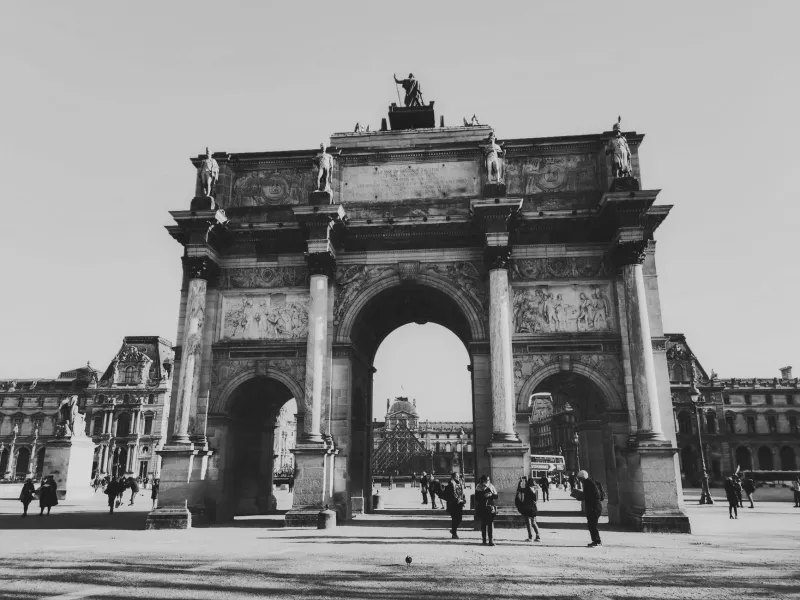
Everyone knows the 1896 Athens Olympics as the triumphant rebirth of the ancient Games — 241 athletes, 14 nations, a global moment that launched a movement. Fewer people know what happened four years later, when that same movement nearly collapsed under the weight of its own ambition and someone else's indifference.
The 1900 Paris Olympics were, by almost any measure, a disaster. And they might be the most important event in Olympic history.
An Afterthought at a World's Fair
The trouble started with Pierre de Coubertin, the French baron who had championed the revival of the modern Games. He wanted Paris to host the 1900 Olympics as a standalone celebration. What he got instead was something far more humbling: the Games were absorbed into the 1900 World's Fair as a minor sideshow, stripped of their identity, and handed over to organizers who had no particular interest in athletics.
The Exposition Universelle of 1900 was one of the largest world's fairs ever staged, drawing over 50 million visitors to Paris over the course of the year. The Olympics, tacked on as an appendage, were officially called "International Championships" in most communications. The word "Olympics" barely appeared in promotional materials. Some athletes who competed had no idea they were participating in the Olympic Games at all — they thought they were entering a local sporting competition attached to the fair.
That's not a minor clerical confusion. That's an identity crisis.
Five Months of Organized Chaos
The 1900 Games stretched from May through October — nearly five months — with events scattered across different venues and dates with no central schedule, no opening ceremony worth mentioning, and no consistent sense of occasion. Compare that to the tight, dramatic format of Athens four years earlier, where everything felt purposeful and momentous.
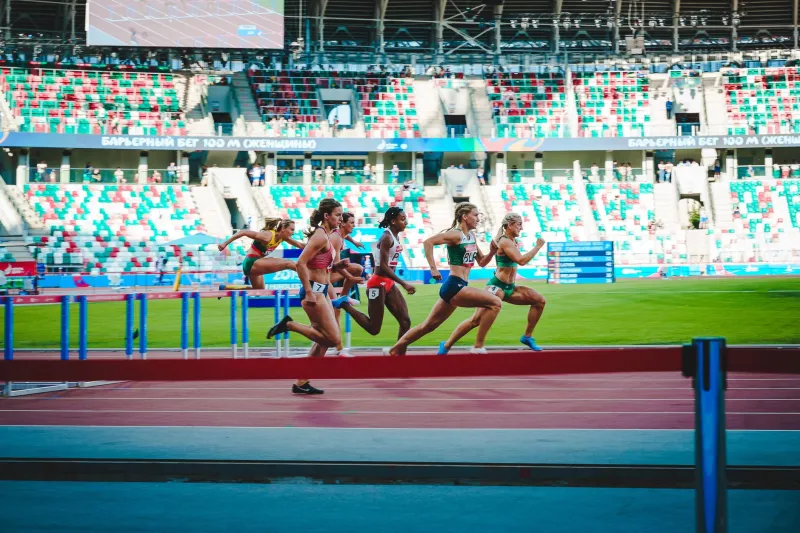
Venues were improvised. The track events were held on grass in the Bois de Boulogne, which sounds picturesque until you consider that the surface was uneven, the course was winding, and the straight sections were interrupted by actual trees. Long jumpers and sprinters had to navigate natural obstacles mid-event. The swimming events were held in the Seine River, where current gave some competitors a meaningful advantage over others depending on their lane assignment.
Organization was so loose that Sunday events became a genuine controversy. Several American athletes — many of them from universities with strict religious observances — refused to compete on the Sabbath. The University of Pennsylvania's team, among others, faced a painful choice between faith and competition. Some withdrew. Some competed anyway and carried the guilt for years. The scheduling chaos had turned a sporting event into an ethical dilemma.
Athletes Who Didn't Know They'd Made History
Perhaps the most remarkable detail of the 1900 Games is how many athletes learned of their Olympic status retroactively. Margaret Abbott, an American golfer from Chicago, won the women's golf competition — becoming the first American woman to win an Olympic gold medal — without apparently realizing the event was part of the Olympics. She thought she'd won a local Parisian tournament. She died in 1955 never having publicly acknowledged her Olympic victory, possibly because she never fully understood what it was.
Her story is both charming and damning. The Games were so poorly communicated, so thoroughly buried under the weight of the World's Fair, that a gold medalist went to her grave unaware of her own place in history.
This wasn't an isolated case. Multiple athletes from multiple nations competed under similar conditions of informational fog. Winners received prizes ranging from trophies to umbrellas to works of art — there were no standardized gold medals. The whole enterprise felt less like a defining moment in world sport and more like a very long afternoon.
De Coubertin's Reckoning
For Pierre de Coubertin, the Paris experience was a personal and professional humiliation. He had fought to make the modern Olympics a serious institution, and he had watched them get swallowed whole by an event that didn't care about them. The 1900 Games drew minimal press coverage, minimal spectator interest, and generated almost no global excitement.
And then came 1904 — the St. Louis Olympics, held in America as part of another World's Fair, which managed to be even more chaotic and even more provincial than Paris. The two consecutive disasters forced de Coubertin and the International Olympic Committee to make a critical decision: either reform the model entirely or watch the movement dissolve.
The answer came in 1906 with the Intercalated Games in Athens — an unofficial but widely celebrated intermediate Olympics that restored public enthusiasm and reminded the world what the Games could be when they were treated with seriousness. It set the stage for the 1908 London Olympics and the 1912 Stockholm Games, which established the template the modern Olympics still follow: dedicated venues, centralized scheduling, national teams, formal ceremonies, and a clear identity separate from any surrounding event.
What the Disaster Accidentally Built
Here's the counterintuitive truth about Paris 1900: it might have been the most instructive event in Olympic history precisely because it failed so completely. Every structural reform that made the modern Olympics what they are today — the opening ceremony, the standardized medal system, the dedicated host city model, the separation from world's fairs — can be traced, at least in part, to the lessons of what went wrong in Paris.
America's own complicated relationship with the early Olympics — sending athletes who sometimes didn't know where they were competing, navigating religious conflicts over Sunday events, dealing with prize structures that had no consistency — helped push U.S. sports administrators toward advocating for clearer international standards.
The 1900 Games remind us that even the most enduring institutions have a near-death story buried somewhere in their past. The Olympics didn't become the world's greatest sporting spectacle despite the chaos of Paris. They became it, in part, because of it.
Sometimes the clearest path to getting something right is watching it go spectacularly wrong first.