Before Ali Opened His Mouth, the Greeks Were Already Doing This
Muhammad Ali was the greatest trash talker in the history of American sport. Ask almost anyone. His verbal performances — the poems, the predictions, the perfectly timed insults delivered with a grin — were as much a part of his legend as any left hook. "Float like a butterfly, sting like a bee" is as famous as any knockout he ever landed.
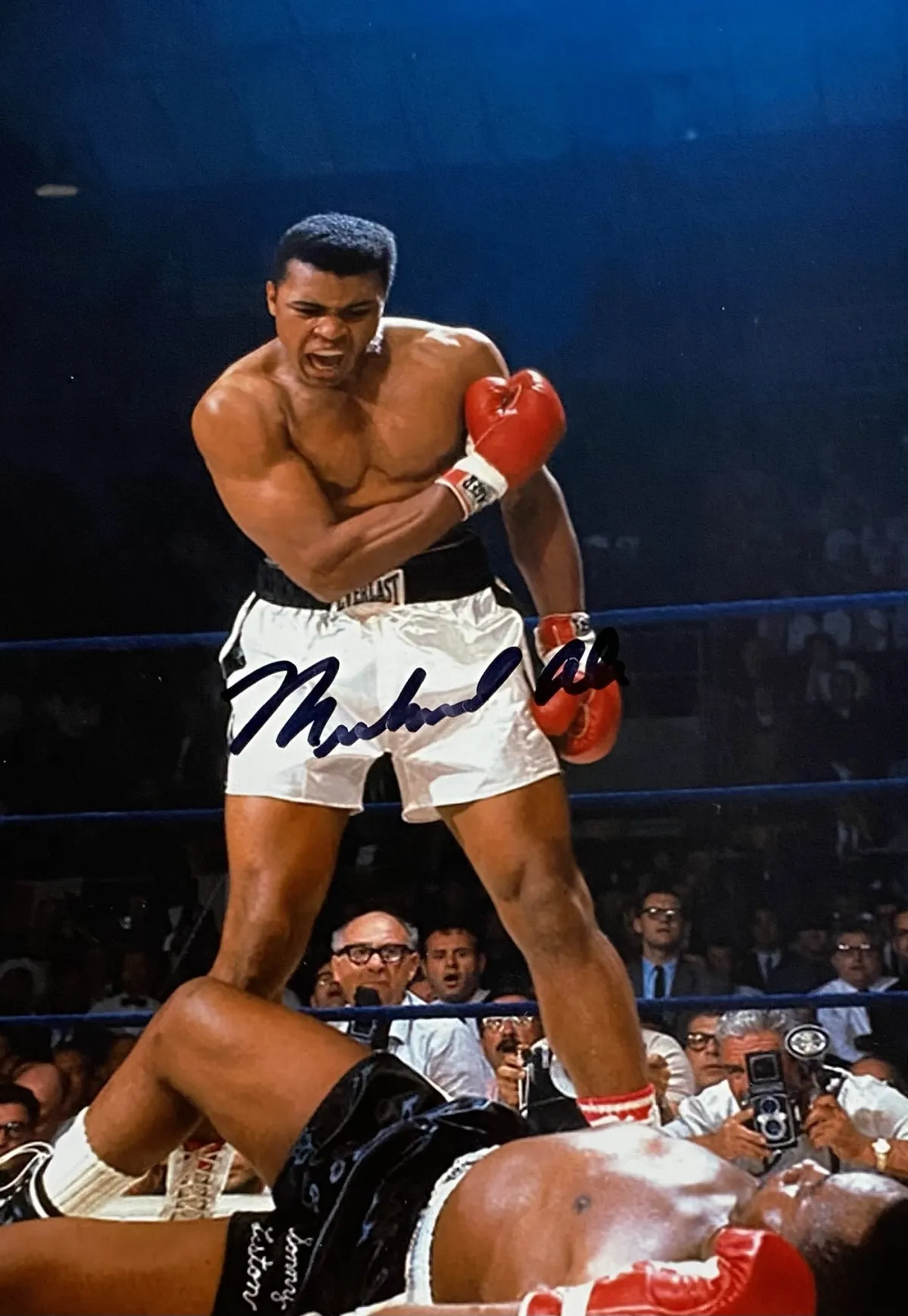 Photo: Muhammad Ali, via d2rbybg5ibx87t.cloudfront.net
But Ali didn't invent any of it. He just refined a tradition that was already ancient when the Roman Empire was young.
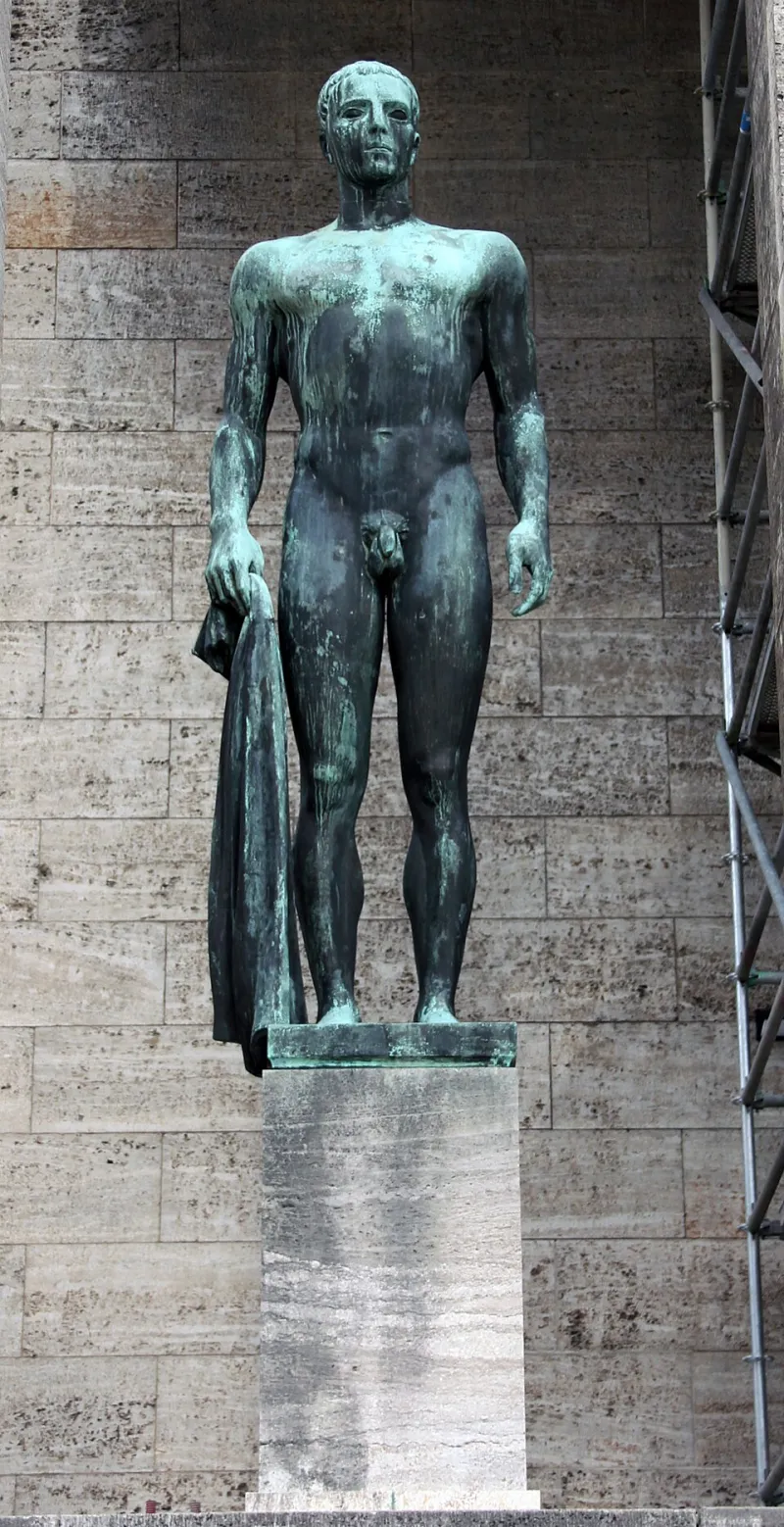
At the original Olympic Games in Olympia, Greece — events that ran continuously from 776 BC until the Roman Emperor Theodosius shut them down in 393 AD — athletes weren't just competing with their bodies. They were competing with their mouths, their reputations, and their ability to make a rival feel small before the starting signal was ever given. Psychological warfare wasn't a sidebar to ancient Greek athletics. It was part of the sport.
 Photo: Olympic Games in Olympia, via i.pinimg.com
The Boast as Athletic Weapon
Ancient Greek culture had a concept called arete — excellence, or virtue — that athletes were expected to embody and, crucially, to announce. Modesty wasn't particularly prized. A great athlete who didn't proclaim his greatness was leaving something on the table.
Pre-competition boasting was a recognized feature of ancient Greek athletic culture. Athletes and their trainers would make public declarations about expected outcomes, sometimes before large crowds gathered at Olympia. These weren't idle predictions. They were calculated acts of psychological dominance designed to plant a seed of doubt in every competitor listening.
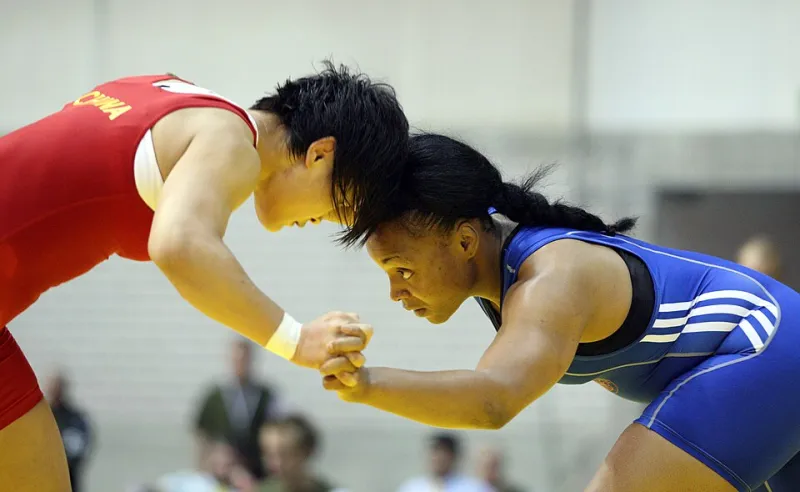
The wrestler Milo of Croton — perhaps the most famous ancient Greek athlete, who won six consecutive Olympic wrestling titles across multiple Games in the 6th century BC — was legendary not just for his physical power but for his theatrical displays of dominance before competition even began. Ancient accounts describe him performing feats of strength in public as a form of intimidation, making opponents aware of exactly what they were walking into before the match started. He was, in the language of modern sports psychology, managing the competitive environment.
Pindar, the great Greek lyric poet who composed odes celebrating Olympic champions, frequently included language about the psychological dimension of competition — the importance of entering a contest with the right mental state, the way a champion's reputation could weaken an opponent before either man had moved.
What the Science Actually Says
For a long time, trash talk was treated as the domain of showboats and troublemakers — colorful but ultimately irrelevant to actual performance. Modern sports psychology has largely dismantled that assumption.
Research into what psychologists call "competitive anxiety" and "attentional focus" has demonstrated that verbal provocation before or during competition can genuinely disrupt an opponent's cognitive processing. When an athlete is rattled — when they're thinking about the insult they just heard rather than the task in front of them — their performance suffers measurably. The brain, it turns out, has limited bandwidth under stress, and anything that hijacks that bandwidth is a competitive advantage.
A study from the journal Psychology of Sport and Exercise found that athletes who engaged in what researchers termed "self-presentational" behavior before competition — essentially, projecting confidence and dominance — performed better than those who did not, partly because the behavior reinforced their own confidence and partly because it affected opponents' perceptions.
Milo of Croton, who had no access to peer-reviewed journals, appears to have figured this out through trial and error about 2,500 years ago.
The American Tradition
American sports culture has always had a complicated relationship with trash talk. On one hand, the country produced Ali, Larry Bird's legendary needle, and the entire theatrical tradition of professional wrestling, which essentially turned pre-match psychological warfare into its own entertainment product. On the other hand, American sports culture also produced the concept of "act like you've been there before" — the expectation that real champions let their performance speak without commentary.
The tension between those two poles is itself a reflection of the ancient Greek ambivalence. Greek culture celebrated the boast, but it also celebrated sophrosyne — self-restraint and moderation. The ideal wasn't to be a braggart. It was to project confidence with enough precision that it landed as intimidation rather than arrogance.
The greatest modern trash talkers tend to walk that line. Kevin Garnett was notorious for his pre-game and in-game psychological tactics, but former opponents consistently noted that what made him effective wasn't random cruelty — it was targeted, specific, and personal. He found the thing that would get under a specific opponent's skin and applied it with surgical precision. That's not so different from an ancient Greek wrestler choosing which feats to perform publicly based on the specific vulnerabilities of the man he was about to face.
When It Backfires
The ancient Greeks also understood that the boast carried risk. If you declared yourself unbeatable and then lost, the humiliation was compounded. The public nature of the prediction made the public nature of the defeat worse.
That dynamic hasn't changed much. When an athlete guarantees a victory and delivers, the trash talk becomes part of the legend — think Joe Namath's Super Bowl III guarantee. When it doesn't land, it becomes the punchline. The psychological weapon cuts both ways.
Sports psychologists today advise athletes on how to use competitive self-presentation strategically, and also how to absorb it — how to hear an opponent's boast and file it away as motivation rather than letting it become a distraction. The mental defense against trash talk is now as much a professional discipline as the trash talk itself.
The Unbroken Line
There is a direct, unbroken line from the athlete standing in the sacred precinct at Olympia, loudly proclaiming his inevitable victory to a crowd of thousands, to Ali standing in front of microphones telling Sonny Liston exactly what was coming for him.
The setting changed. The audience grew from thousands to millions. The medium shifted from the spoken word in an open field to television broadcasts heard around the world. But the underlying mechanism — using words, confidence, and public performance to shape the psychological landscape before physical competition begins — is as old as organized sport itself.
Ancient Greek athletes knew something that took modern science centuries to confirm: the competition starts long before anyone takes the field.