One Hundredth of a Second: The Long, Strange Journey From a Judge's Eye to the Atomic Clock
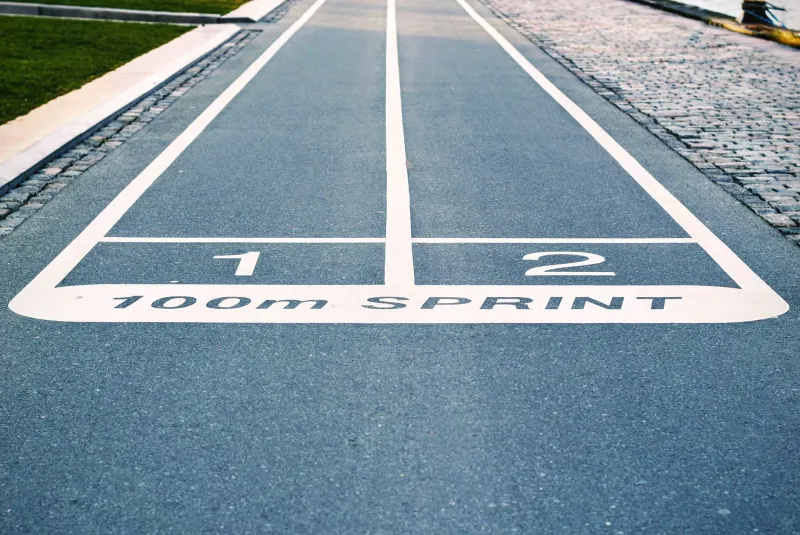
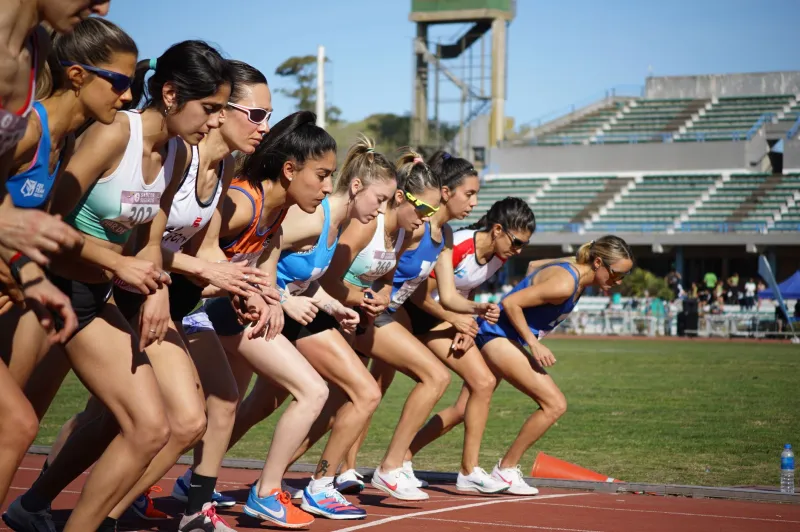
In 2016, Usain Bolt crossed the finish line of the Olympic 100-meter final in 9.81 seconds. His nearest competitor, Andre De Grasse, finished in 9.90. That gap—nine hundredths of a second—is roughly the time it takes you to blink. In ancient Greece, both men would have been handed a wreath and called it a tie.
The way we measure victory has changed more dramatically than almost any other aspect of sport. And that change hasn't just refined how we crown champions—it has fundamentally altered who gets to be one.
When a Race Was Won by Agreement
The earliest Olympic Games, held at Olympia beginning in 776 BC, had no clocks. No stopwatches. No finish-line cameras. A panel of judges called Hellanodikai observed races with their own eyes and declared a winner based on what they saw. In contests where two athletes arrived nearly simultaneously, the result could spark genuine dispute—and occasionally, a rematch.
This wasn't sloppiness. It was simply the technology of the time. The Greeks weren't measuring performance against a universal standard; they were measuring one man against another. The question wasn't how fast you ran. It was did you beat him. Time, as an athletic metric, didn't exist.
For centuries, this model held. Medieval jousting tournaments, Renaissance foot races, colonial American running contests—all were judged by human observers. The fastest man was whoever looked fastest to the people watching. Results were sometimes disputed. Champions were sometimes chosen by crowd noise.
The Stopwatch Changes Everything
The mechanical stopwatch arrived in the late 18th century, and by the mid-1800s it had quietly begun dismantling the old way of doing things. For the first time, a performance could be measured—attached to a number that existed independently of any judge's opinion.
When the modern Olympics launched in Athens in 1896, stopwatches were on the track. Thomas Burke won the 100-meter dash in 12.0 seconds. That number meant something new: it was a record, a benchmark, a target for every sprinter who came after him. The competitor was no longer just the man in the next lane. The competitor was the clock.
But early stopwatches had their own limitations. They were hand-operated, which introduced human reaction time into every measurement. Studies later estimated that manually triggered stopwatches could carry errors of up to 0.2 seconds per reading—a margin that, by modern standards, would separate a gold medalist from someone who didn't make the podium.
For decades, nobody cared much. Races were still won by comfortable margins, and the imprecision was accepted as part of the game.
The Photo Finish and the Birth of the Near-Miss
The 1932 Los Angeles Olympics introduced the photo-finish camera to track and field. Suddenly, races that looked like ties to the naked eye could be reviewed frame by frame. Margins that had previously been invisible became, for the first time, visible—and consequential.
What the photo finish revealed was unsettling: athletes who had been declared co-winners for generations were actually not equal. Someone had crossed first. The gap was just too small for human eyes to catch in real time.
This created a new kind of athlete: the photo-finish loser. A competitor who ran the race of his life, who by any reasonable human observation had won, only to discover in a darkroom somewhere that he'd actually come second. The technology didn't change how fast anyone ran. It changed what fast enough meant.
Digital Precision and the New Arithmetic of Glory
By the 1970s, fully automatic timing—FAT—had replaced hand-held stopwatches at elite competitions. Sensors at the starting blocks and finish line removed human reaction time from the equation entirely. Times were now recorded to one-hundredth of a second as standard, and in some disciplines, to one-thousandth.
The effect on the record books was immediate and striking. Performances that had stood for years were reclassified. Some "world records" set with manual timing were quietly asterisked. The past and the present, it turned out, weren't speaking the same numerical language.
Today, World Athletics measures sprint times to 0.001 seconds for internal data, though official results are rounded to 0.01. Swimming records are kept to the hundredth. In cycling time trials, athletes are separated by thousandths. The margins have become so small that the equipment measuring them has to be more reliable than the athletes using it.
What Precision Cost Us—and What It Gave
There's a reasonable argument that hyper-precise timekeeping has made sport smaller in one specific way: it has eliminated the tie. Ancient Greeks had a word for a dead heat—isotachys—and it was considered an honorable result. Two men were simply equal. That was acceptable, even admirable.
Modern sport cannot tolerate that ambiguity. Someone must win. The clock—or the sensor, or the algorithm—will find the difference if it exists. And increasingly, it always does.
But the gains outweigh the losses. Precision timekeeping gave us the world record as a living, evolving institution. It gave coaches a diagnostic tool—split times, reaction times, phase-by-phase breakdowns—that transformed how athletes train. It gave fans a shared, objective language for greatness. And it gave history a ledger: a precise accounting of how much faster humanity has gotten, decade by decade, generation by generation.
Bolt's 9.58-second world record in the 100 meters, set in Berlin in 2009, is 2.42 seconds faster than Burke's winning run in Athens in 1896. That gap is enormous by sprint standards. And we know it exactly—not approximately, not roughly, not by the recollection of some judge who was standing near the finish line.
We know it to the hundredth of a second. And that precision, strange as it sounds, is its own kind of history.